Tuvixeddu Necropolis

Immagine per l'APP
Necropoli di Tuvixeddu
Categoria/Sottocategoria
macrocategoria
prezzi
Descrizione
Free entrance
orari
chiusura
Giorno/i di apertura
Descrizione
January/March 06.00 am - 9.00 pm
in data singola
No
chiusura
Giorno/i di apertura
Descrizione
April/September 05.30 am - 10.30 pm
in data singola
No
chiusura
Giorno/i di apertura
Descrizione
October/December 06.30 am - 10.00 pm
in data singola
No
chiusura
Giorno/i di apertura
Descrizione
The upper path that, starting from the small green theater, climbs up to the viewpoint at the top of the hill closes at 5 pm.
in data singola
No
chiusura
Giorno/i di apertura
Descrizione
No dogs area. Access allowed with the dog leash.
in data singola
No
Descrizione

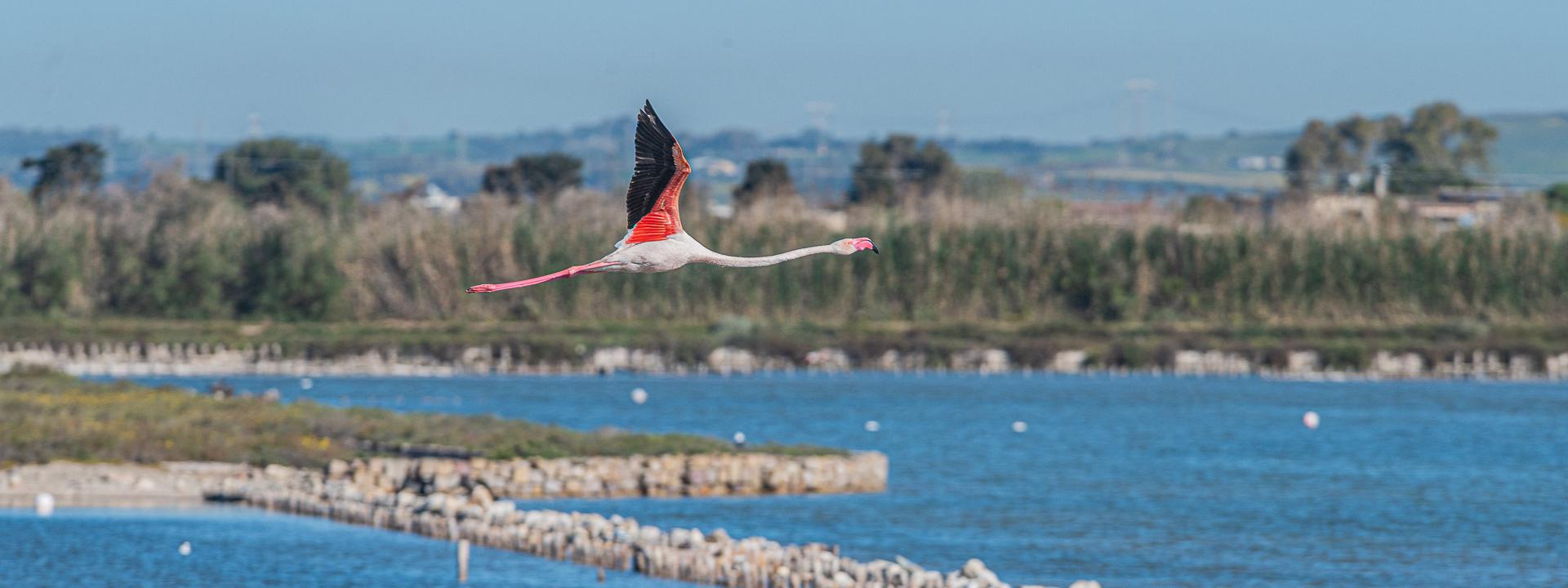
Tuvixeddu is the most ancient and representative burial area of the city, and can be considered the only visible evidence of Karaly, the Phoenician-Punic settlement in the Gulf of the Angels.

Several archeological studies have testified a continuity in using and in attending the area from Prehistory to the present day, providing a large number of finds: tombs and grave goods, wall paintings, literature and popular anecdotes. Clandestine excavations, costruction works and hasty surveys, however, have caused a loss of some essential data and informations that makes quite difficult to reconstruct the complete history of the site.
The discovery of flint and obsidian artifacts, dating back to the 6th and 5th millenium BC and found in the area between the lagoon of Santa Gilla and the hill of Tuvixeddu, proves the human presence since the Neolithic Age.
The Phoenician-Punic necropolis, the largest in the Mediterranean basin, developed between the 6th  and 3rd century BC, through the excavation of the limestone rock to create burials, mainly well tombs, where the inhumated corpses where buried at a depth varying between 8 and 3 metres. The great archaeological relevance of the necropolis of Tuvixeddu is given also by the presence of wall paintings of an Northern African matrix, quite rare throughout the Punic world. The paintings, dating back to the 4th - 3rd century BC, show decorative floral patterns such as friezes of lotus flowers and palms, but also snakes, gorgons and geometric symbols. Particularly noteworthy are the Tomb of Sid, where the pictorial representation shows a significant similarity to the Sardinian- Punic deity of the same name, worshipped in the Temple of Antas, and the Tomb of the Uraeus, embellished by a refined pictorial frieze in which stands out the figure of the winged cobra snake.
In the following centuries, the necropolis was further expanded at the foot of the hill, where the Romans dug burial chambers and pits. There are also monumental tombs belonging to famous people .
In modern times, particularly during the 19th century, the area was used for industrial and residential purposes, as it is testified by the system of bourgeois villas surrounding the hill Tuvixeddu and the necropolis, like the beautiful Art Nouveau residence Villa Mulas (formerly Villa Massa), dating back to the early 20th century.

Indirizzo
Via Falzarego
Poligono GEO

Necropoli di Tuvixeddu

Necropoli di Tuvixeddu

Via Falzarego

Fascia età
Fuori Cagliari
No
usato per affollamento
No
da usare solo per eventi e percorsi
Off
Indirizzi email
uffveca@comune.cagliari.it
Comune
Tipo di gestione
Immagine per il Portale
Necropoli di Tuvixeddu

Add new review

Your review will be visible after approval by the editors

To post a review you must be an authenticated user.
Log in with Social Login

Italian Railways Museum

Immagine per l'APP
Museo Ferroviario
Categoria/Sottocategoria
macrocategoria
prezzi
Descrizione
Free entrance
orari
chiusura
Giorno/i di apertura
dalle
09:00 am
alle
12:00 pm
Giorno da
Giorno a
Descrizione
Visiting the museum is possible other days also, on reservation
in data singola
No
Descrizione

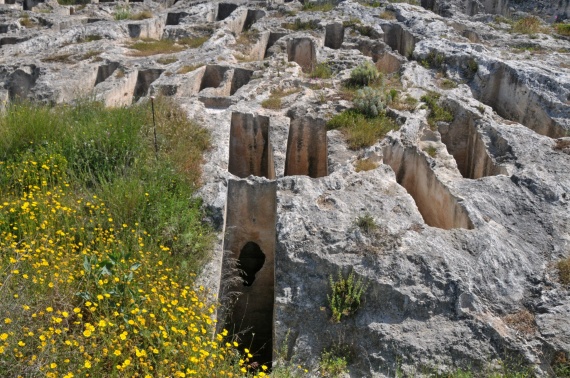
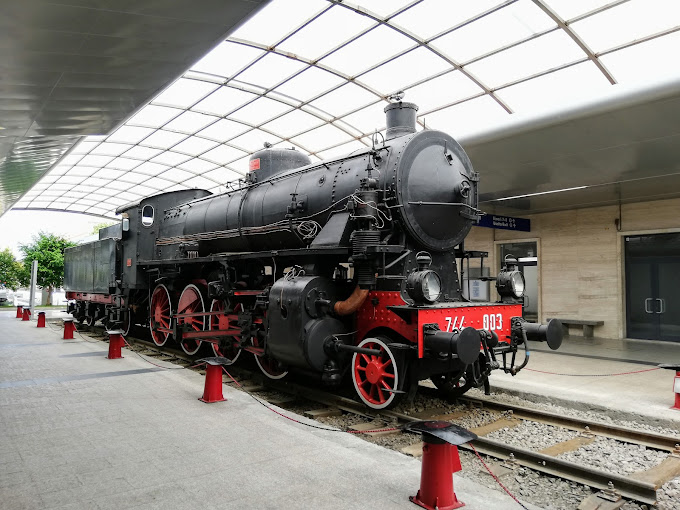
The Italian Railways Museum, located into the central train station in via Sassari, traces through several examples the most important steps in the history of railways in Sardinia. The original purpose was to conserve the testimony of industrial archeology preserved to nowdays.

The business began in the second part of 19th century, carring out the project of the engineer Benjamin Piercy, which led to the construction of 400 km of standard gauge network , to which were added the so-called "complementary" narrow gauge.

The museum , which collects several testimonies of Sardinian history of the railways , exhibits various objects as vintage photographs , a telegraph of the Real Railways, machineries, a working model of the ferry Gennargentu , lamps, clocks and rail instruments, but the most important piece is probably a living from the Sardinian Royal Train , very characteristic , since it has low height chairs made specifically for the stature of King Vittorio Emanuele III.

Indirizzo
Via Sassari, 24 - Presso Stazione Trenitalia
Poligono GEO

Museo Ferroviario

Museo Ferroviario

Via Sassari, 24 - Presso Stazione Trenitalia

Fascia età
Fuori Cagliari
No
Quartiere
usato per affollamento
No
da usare solo per eventi e percorsi
Off
peso
telefoni
Indirizzi email
info@sardegnavapore.it
Comune
Immagine per il Portale
Museo Ferroviario

Add new review

Your review will be visible after approval by the editors

To post a review you must be an authenticated user.
Log in with Social Login

Arciconfraternita dei Genovesi Museum

Immagine per l'APP
Museo dell'Arciconfraternita dei Genovesi
Categoria/Sottocategoria
macrocategoria
prezzi
Descrizione
Free donation
orari
chiusura
Giorno/i di apertura
dalle
05:30 pm
alle
07:30 pm
Descrizione
Monday - Wednesday - Friday
in data singola
No
Descrizione

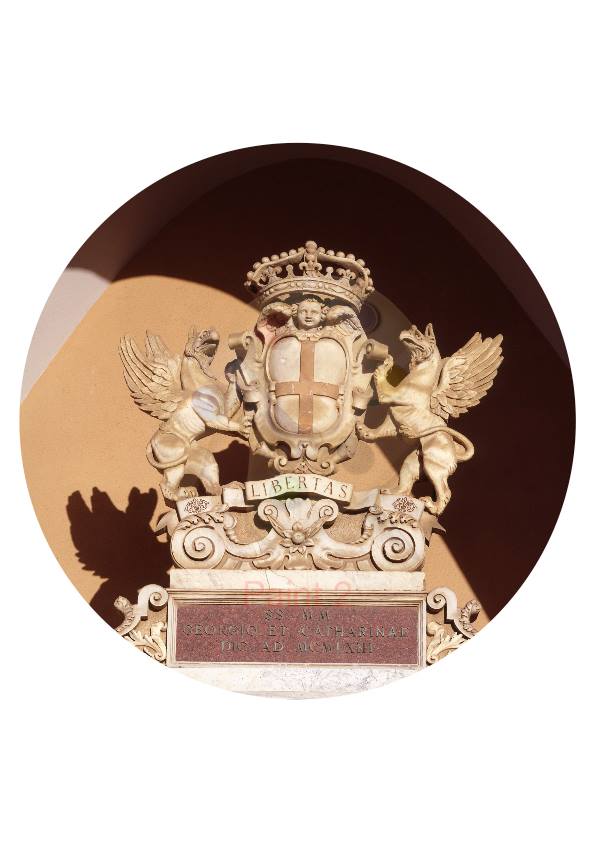
Opened in 1999 , the museum testifies the identity of the citizens of Cagliari of Genoese origin . In fact , it is located near the church dedicated to the patron saints of Genoa, George and Catherine, built at the expense of Archconfraternity , after the destruction of the historic one during the bombing in 1943. The ancient church's liturgical objects , recovered from the ruins thanks to the hands of the confraternity's members , are now preserved and exhibited in the museum. Among the most valuable pieces we find : the "Madonna of the city" , a work of seventeenth-century Genoese school ; " Christ and Mary offer the rosary to the Dominican monks " by Giovanni Bernardino Azzolin; "Deposition of Christ," by Gioacchino Asseretos ; the wooden group of processional case of the " Martyrdom of St. Catherine ," by Giuseppe Anfosso ; the silver and golden-copper monstrance of the '700 and the chasuble with the effigy of Saints George and Catherine and Genoa's coat of arms. The confraternity also preserves a rich archive containing documents from the sixteenth century , included the historic statute written in Italian vernacular.

Indirizzo
Via Gemelli, 2
Poligono GEO

Museo dell'Arciconfraternita dei Genovesi

Museo dell'Arciconfraternita dei Genovesi

Via Gemelli, 2

Fascia età
Fuori Cagliari
No
Quartiere
usato per affollamento
No
da usare solo per eventi e percorsi
Off
peso
telefoni
Indirizzi email
arciconf@tiscalinet.it
Comune
Immagine per il Portale
Museo dell'Arciconfraternita dei Genovesi

Add new review

Your review will be visible after approval by the editors

To post a review you must be an authenticated user.
Log in with Social Login

Museum of the Treasure of Saint Eulalia

Immagine per l'APP
Museo del Tesoro di Sant'Eulalia
Categoria/Sottocategoria
macrocategoria
prezzi
prezzo
€5.00
Descrizione
Full price ticket
prezzo
€2.50
Descrizione
Reduced-price ticket (children from 6 years old, students up to 26 years old)
Descrizione
Free admission for children under 6 years old and persons with disabilities
prezzo
€3.00
Descrizione
Ingresso donna dall'8 al 10 marzo 2024
orari
chiusura
Giorno/i di apertura
dalle
09:30 am
alle
01:00 pm
Giorno da
Giorno a
Descrizione
From Monday to Sunday
in data singola
No
chiusura
Giorno/i di apertura
dalle
03:30 pm
alle
06:30 pm
Giorno da
Giorno a
Descrizione
From Monday to Sunday -------

Closed on July 28 from 9:30 a.m. to 1:30 p.m.
in data singola
No
Descrizione

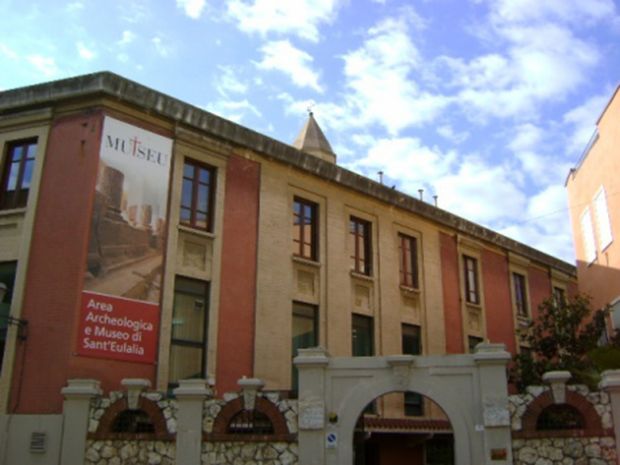
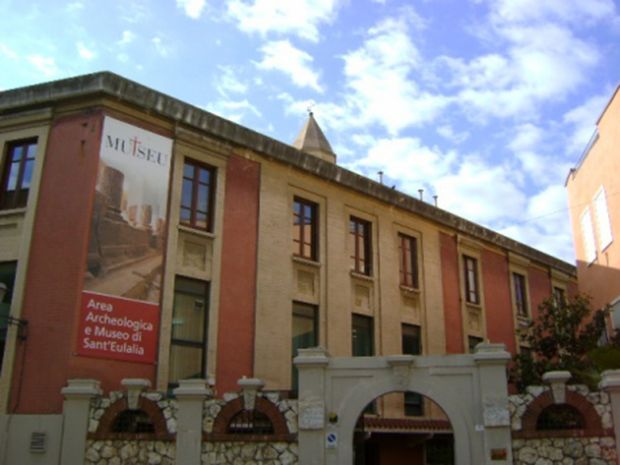
The museum shows the history of the Parish of St. Eulalia, one of the most traditional in Cagliari and in Marina district, where it is located.

In its exhibition halls houses a wide collection of wooden paintings, silverware, vestments and a historical archive.

Among the paintings we report the "Ecce Homo" (double-sided oil on canvas), depicting Jesus scourged, attributed to John Bilevelt, a painter of Flemish origin of the first half of the 17th century. Remarkable, also, the Madonna with Child, a 14th century table of Tuscan school.

Among the wooden works, as well as artefacts of 18th century Sardinian anonymous carvers and Neapolitan workshops, deserves to be mentioned "Our Lady of the Forsaken" (last decades of the '500).

The hall of silver gathers lamps, crosses, chalices, monstrance and ciborium commissioned by the Congregation of the Blessed Sacrament, some in baroque style from Liguria and Piedmont, while others produced in Sardinian workshops.

Rare vestments, belonged to popes and archbishops, are shown in apposite display cases and cabinets. Donated by noble families and congregations, they are rich in symbolism and references to sacred history and coats of arms. Noteworthy is "The Planet of Passion", date back to the middle of the '600 and attributable to some embroiders from Liguria, describing Jesus in two moments: in prayer in the Garden of Gethsemane and into the Praetorium.

The archive consists of the parish documentation and funds from the arch-confraternities of Holy Sacrament of the Holy Sepulchre and St. Lucia. It preserves scrolls, books, records and papers, dating from the first half of the 500 until the first decades of the 900, which testify the work of churches and congregations in the religious, economic and social field, and their relations with the inhabitants of Marina district.

From the museum it's possible to reach underground archaeological area can be visited with the same ticket.

Indirizzo
Vico del Collegio, 2
Poligono GEO

Museo del Tesoro di Sant'Eulalia - Mutseu

Museo del Tesoro di Sant'Eulalia - Mutseu

Vico del Collegio, 2

Fascia età
Fuori Cagliari
No
Quartiere
usato per affollamento
No
da usare solo per eventi e percorsi
Off
peso
Indirizzi email
mutseu@tiscali.it
Comune
Immagine per il Portale
Museo del Tesoro di Sant'Eulalia

Add new review

Your review will be visible after approval by the editors

To post a review you must be an authenticated user.
Log in with Social Login
Museum of Santuario di Nostra Signora di Bonaria

Immagine per l'APP
Museo del Santuario di Nostra Signora di Bonaria
Categoria/Sottocategoria
macrocategoria
prezzi
Descrizione
Free entrance
orari
chiusura
Giorno/i di apertura
dalle
06:30 am
alle
11:30 am
Giorno da
Giorno a
in data singola
No
chiusura
Giorno/i di apertura
dalle
04:30 pm
alle
06:45 pm
Giorno da
Giorno a
in data singola
No
chiusura
Giorno/i di apertura
dalle
04:30 pm
alle
08:30 pm
Giorno da
Giorno a
in data singola
No
Descrizione

The museum, located near Bonaria's shrine and the convent of Mercedari's order, contains the testimonies of the ancient history of Bonaria hill and the faithfuls' devotion to Our Lady of sailors. The exhibition space consists of three rooms and the cloister corridor.

Corridor: In the corridor are exposed votive pictures (XVIII- XIX century) and various other votive offerings including thousands of silver hearts and the wooden box that contained the statue of the Madonna.

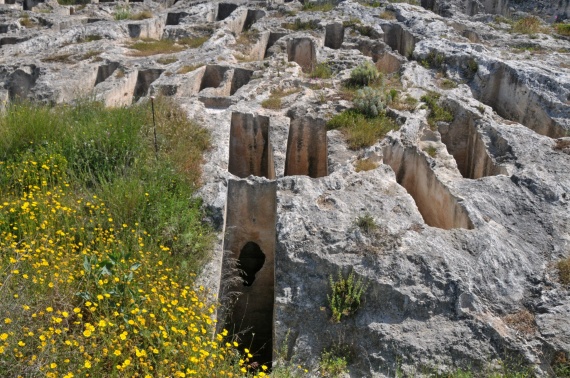
First room: in the first room, there are some archeological evidences of the Hill, which was inhabited since Nuragic period. It was the site of a late- Punic and Roman necropolis .

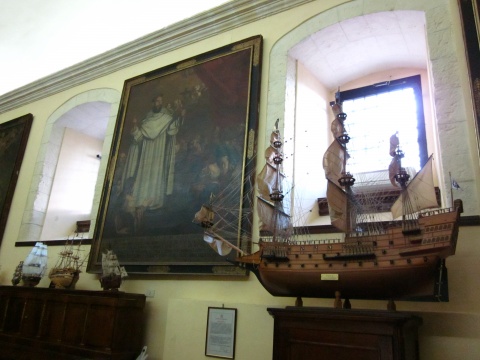
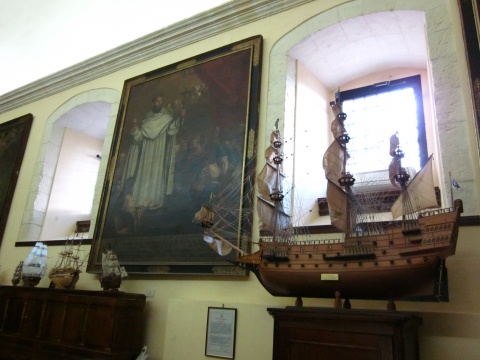
Second room: in the second room are exposed several models of ships (about 150 ) of all ages, a silver anchor offered by Queen Margaret in 1899 as thanksgiving for the success of the polar expedition of his nephew, Luigi degli Abruzzi and some mummies from the noble Spanish family of Alagon, died because of the plague in 1605, which surviving among the limestone rock under the chancel of the sanctuary where they had been buried.

Third room : in the third room there is the treasure, consisting of precious decors, votive offerings donated by kings , such as gold crowns of Vittorio Emanuele I and Maria Theresa, by popes and other famous people. Several ex-votos as weapons, chains and ostrich eggs (a symbol of resurrection), were donated by the slaves, freed by Mercedars, actively engaged in the work of redemption.

Indirizzo
Viale Bonaria
Poligono GEO

Museo del Santuario di Nostra Signora di Bonaria

Museo del Santuario di Nostra Signora di Bonaria

Viale Bonaria

Fascia età
Fuori Cagliari
No
Quartiere
usato per affollamento
No
da usare solo per eventi e percorsi
Off
peso
telefoni
Comune
Immagine per il Portale
Museo del Santuario di Nostra Signora di Bonaria

Add new review

Your review will be visible after approval by the editors

To post a review you must be an authenticated user.
Log in with Social Login
Cathedral Museum

Immagine per l'APP
Museo del Duomo
Categoria/Sottocategoria
macrocategoria
prezzi
prezzo
€4.00
Descrizione
Full price ticket
prezzo
€2.50
Descrizione
Reduced: (under 12 and over 65 years old)
prezzo
€3.00
Descrizione
Groups
Descrizione
Free: Kids up to 8 years old
orari
chiusura
Giorno/i di apertura
Descrizione
Currently closed.
in data singola
No
chiusura
Giorno/i di apertura
dalle
10:00 am
alle
01:00 pm
Giorno da
Giorno a
in data singola
No
chiusura
Giorno/i di apertura
dalle
04:30 pm
alle
07:30 pm
Giorno da
Giorno a
in data singola
No
Descrizione

Opened in 2004, the Cathedral Museum is located near St. Mary's. It houses a part of the Cathedral  treasury , which includes  some bequests left by the archibishops  of  the Church of Cagliari,  donations and numerous silver liturgical objects such as chalices , ciborium , monstrance , processional crosses , crucifixes , as well as wooden statues and paintings. Among the most important  there are  "The Altarpiece of Beneficed" , a double triptych alterpiece of Catalan type , made around 1527 in Stampace, in the workshop of Pietro  Cavaro , "The grief over the Dead Christ", a group of seven statues, date back to the second half of the fifteenth or early sixteenth century and   "The Triptych of Clement VII" , attributed to the fifteenth-century Flemish painter Rogier van der Weyden , which  is linked to unique historical events .  It was stolen , like many other works of art and relics , during the Sack of Rome in 1527 , then it was  abandoned after a storm, by  the Landsknechte on the run  from Gaeta. Finally, it was found in Cagliari and returned to its owner , Giulio de ' Medici, known as Pope Clement VII . In 1531 , as a sign of gratitude , the Pope gave to the  Archbishop of Cagliari  the triptych and  the Holy Thorn , that was stolen too , with the obligation to expose them every year in the Cathedral during  the  celebration for the Assumption of Mary. The painting consists of three panels: in the middle is represented the Pieta , with  the Virgin of Sorrows on the left and  Christ crowned with thorns on the right. On  the left side panel is portraied the Madonna with Child and  St Anne , while on the right  St. Margaret and the Dragon.

Indirizzo
Via del Fossario, 5
Poligono GEO

Museo del Duomo

Museo del Duomo

Via del Fossario, 5

Fascia età
Fuori Cagliari
No
Quartiere
usato per affollamento
No
da usare solo per eventi e percorsi
Off
peso
Indirizzi email
info@museoduomodicagliari.it
Comune
Immagine per il Portale
Museo del Duomo

Add new review

Your review will be visible after approval by the editors

To post a review you must be an authenticated user.
Log in with Social Login
Beato Nicola da Gesturi Museum

Immagine per l'APP
Museo del Beato Nicola da Gesturi
Categoria/Sottocategoria
macrocategoria
prezzi
Descrizione
Free admission
orari
chiusura
Giorno/i di apertura
Descrizione
Temporarily closed.
in data singola
No
chiusura
Giorno/i di apertura
dalle
04:00 pm
alle
07:00 pm
Giorno da
Giorno a
in data singola
No
chiusura
Giorno/i di apertura
dalle
09:00 am
alle
12:30 pm
Giorno da
Giorno a
in data singola
No
chiusura
Giorno/i di apertura
dalle
04:00 pm
alle
07:00 pm
Giorno da
Giorno a
Descrizione
Same time on holidays
in data singola
No
Descrizione

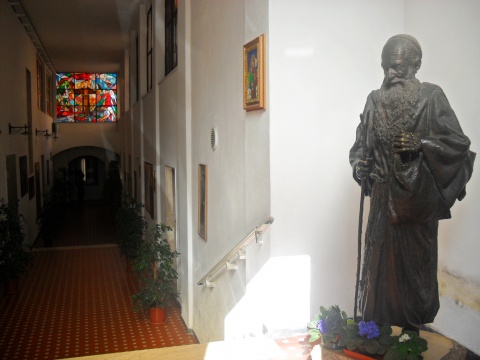
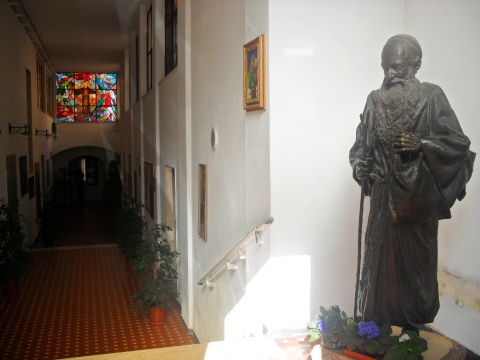
The museum is housed in the Convent of the Capuchin Friars Minor of Sardinia, which for thirty-four years hosted Fra Nicola from Gesturi.

The friar, who lived from 1882 to 1958 and declared blessed in 1999 by Pope John Paul II, is still alive in the hearts of the many faithful, especially from Cagliari, who remember his goodness and thaumaturgical abilities.

The exhibition is set up in a wing of the convent, next to the cloister, which was formerly the burial place of the friars. The rooms, with vaulted ceilings, preserve personal objects and photos that portray the friar in different moments of life, as well as the various stages of the beatification process.

There are the tombstone in the Bonaria cemetery and the remains of the coffin before the body was moved to the church of Saint Ignazio. Remarkable images of June 10, 1958, when an immense crowd attended the funeral.

On show the friar's worn-out clothes, cloak, glasses and all the poor personal items. There is no shortage of folders with the testimonies given by people during the beatification process.

In the museum there are also several bronze sculptures, always dedicated to the friar of Gesturi for whom the cause of canonization has been initiated.

The exhibition also includes the ex-votos and the precious treasures of Saint Ignazio from Laconi (1701-81), as well as the coffin of Fra Nicola from San Vero Milis, who died in the smell of holiness (1631-1707).

Indirizzo
Viale Sant’Ignazio da Laconi, 94
Poligono GEO

Museo del Beato Nicola da Gesturi

Museo del Beato Nicola da Gesturi

Viale Sant’Ignazio da Laconi, 94

Fascia età
Fuori Cagliari
No
Quartiere
usato per affollamento
No
da usare solo per eventi e percorsi
Off
peso
telefoni
Comune
Immagine per il Portale
Museo del Beato Nicola da Gesturi

Add new review

Your review will be visible after approval by the editors

To post a review you must be an authenticated user.
Log in with Social Login
Siamese Art Museum "Stefano Cardu"

Immagine per l'APP
Museo d'Arte Siamese "Stefano Cardu"
Categoria/Sottocategoria
macrocategoria
prezzi
prezzo
€3.00
Descrizione
Full price ticket
prezzo
€1.50
Descrizione
Reduced-price ticket (students up to the age of 26, people over 65 years old and groups of at least 15 people)
Descrizione
Free admission for children under 6 years old, people with disabilities and their carers, journalists and ICOM members.
prezzo
€2.00
Descrizione
Additional charge for guided tours (per person)
orari
chiusura
Giorno/i di apertura
dalle
10:00 am
alle
06:00 pm
Giorno da
Giorno a
Descrizione
NB: the ticket office closes 30 minutes before closing time.
in data singola
No
chiusura
Giorno/i di chiusura
Giorno da
Giorno a
in data singola
No
Descrizione

The Siamese Art Museum presents a wide variety of artistic pieces from different Asian cultures. However, it isn't identified as a " Museum of Oriental Art, " but as " Siamese Art Museum " to highlight that mainly it houses objects from Siam, and it is exactly this feature that makes the collection so unique and peculiar.

The history of the museum begins in July 1914 , when the collector Stefano Cardu, who lived for a long time in Siam, sent a letter to the Mayor Ottone Baccaredda, in which he offered part of his collection, as a gift to Cagliari.

Next to art pieces of religious subject, the museum exhibits also objects of domestic use, worked in a precious way, which represent an interesting overview about the level of handscraft production in those places. Statuettes and other ivory objects, mainly date back to the 17th century , worked with an amazing skill are produced in Japan, as well as the "tsuba" (iron washers that were used to protect the hand wielding the sword), artifacts that reveal a rare art ability. Among the most notable porcerlaines, we find the Chinese one of the Ming period and the early Quing emperors (from 14th to the 17th century).

A very rare part of the collection consists of the numismatic coins from the 11th to the last century.

A museum's section is also dedicated to arms: a collection of great interest especially for the presence of Siamese weapons, yet little known, which constitute the biggest and significant group.

Indirizzo
Piazza Arsenale c/o Cittadella dei Musei
Poligono GEO

Museo d'Arte Siamese "Stefano Cardu"

Museo d'Arte Siamese "Stefano Cardu"

Piazza Arsenale c/o Cittadella dei Musei

Fascia età
Fuori Cagliari
No
Quartiere
usato per affollamento
No
da usare solo per eventi e percorsi
Off
telefoni
Indirizzi email
museicivici@comune.cagliari.it
Comune
Immagine per il Portale
Museo d'Arte Siamese "Stefano Cardu"

Add new review

Your review will be visible after approval by the editors

To post a review you must be an authenticated user.
Log in with Social Login
Botanical Museum

Immagine per l'APP
Museo botanico Cagliari
Categoria/Sottocategoria
macrocategoria
orari
chiusura
Giorno/i di apertura
Descrizione
A 30 minutes guided tour is available only on reservation.
in data singola
No
Descrizione

The Botanical Museum  was opened in November 2008. It was created with the intent to incorporate visits to the Botanical Gardens with monographic and thematic analisys . To prepare certain sections were made botanical models in three dimensions that , thanks to the passion of Dr. Cristina Delunas, manager of the structure, reproduce in a modern  and renovated way, the ancient art of wax modeling . A combination of art and science, well known in the past centuries, which  had as illustrious character C. Susini and L. Inkwells , best known for the anatomical waxes and that, after E.Tortori's death(1893) , fell into disuse and was almost forgotten. In this small museum the ancient art rises again:  mushrooms , flowers , carnivorous plants , pollen and insects  take shape, completely created  by hand over the flame of an alcohol lamp. Unique pieces, made in the belonging laboratory . The museum houses  scientific instruments used in the Departement during past centuries , such as microscopes, precision balances and dryers. It preserves an important collection of herbal preparations in formalin which has about 200 pieces. Historically important  for the place where the Garden and then the Museum rise,  is a small collection of archaeological finds from the Roman period ( first and second century . D. C. ) found in the Garden itself. A showcase is dedicated to the history of herbal medicine .

Indirizzo
Viale Sant'Ignazio da Laconi, 11 - 13
Poligono GEO

Museo Botanico

Museo Botanico

Viale Sant'Ignazio da Laconi, 11 - 13

Fascia età
Fuori Cagliari
No
Quartiere
usato per affollamento
No
da usare solo per eventi e percorsi
Off
peso
telefoni
Comune
Immagine per il Portale
Museo botanico Cagliari

Add new review

Your review will be visible after approval by the editors

To post a review you must be an authenticated user.
Log in with Social Login
National Archaeological Museum

Immagine per l'APP
Museo Archeologico Nazionale
Categoria/Sottocategoria
macrocategoria
prezzi
prezzo
€10.00
Descrizione
Full price ticket (Visit to the 16th century Cannoniere is included)
prezzo
€5.00
Descrizione
Reduced price ticket (Visit to the 16th century Cannoniere is included)
prezzo
€2.00
Descrizione
Reduced price ticket (from 18 to 25 years)
Descrizione
Free entrance for kids up to 18 years.
orari
chiusura
Giorno/i di apertura
dalle
08:30 am
alle
07:30 pm
Giorno da
Giorno a
Descrizione
Ticket office closed at 06:45 pm.

in data singola
No
chiusura
Giorno/i di chiusura
Data da - a
-
Descrizione
Closed for maintenance work and accessibility improvements.
in data singola
No
Descrizione

The history of the National Archaeological Museum of Cagliari started in 1800, when Ludovico Baylle proposed the creation of a museum in order to collect the archaeological collections, to preserve the island Natural History samples and to make it accessible to the public, since 1802.

Since then, several members in the Reign of Sardinia cultural scene were involved in the museum directions, as De Prunner, Spano, Cara, Gennari or Vivanet at the end of XIX century.

Thanks to a large number of donations, private collections purchases, archaelogical finds from different excavation campaigns or objects accidentally recovered, during XIX century the museum was moved to more and more appropriate venues. At the beginning of the XX century, it was moved to the former National Mint and Armory building in piazza Indipendenza, in Castello district, suited by the architect Spano for this new purpose.

The new museum exhibition was organized in different halls according to different themes: prehistoric Sardinia, punic Sardinia, roman Sardinia.

Due to the several archaelogical campaigns after the WWII, since fifties the need of a bigger venue emerged. Because of this necessity, the Citadel of Museums was settled down to accomodate all museum collections and more.

The new National Archaeological Museum of Cagliari has four floors: the first is devoted to an educational presentation of ancient cultures succession in Sardinia, starting from the Neolithic period.

Therafter, we find the nuragic civilization, which is represented by countless artifacts among which it is possible to admire the bronzes collection, that collects samples from all over the island.

Then we have the Phoenician, Punic and Roman civilizations, extremely important for Sardinian history; between the most representative findings there are traditional pottery and fine craftsmanship objects. The ground floor ends with a collection of Punic and Roman coins and a didactic showcase for blinds.

The other three floors are dedicated to the illustration of different territorial areas, with the exposition of the material found in different locations according to topographical criteria, with showcases dedicated to specific archaeological sites. Among them there are very important areas dedicated to Su Nuraxi Barumini, the Sanctuary of Antas and to the Phoenician cities of Sulci and Monte Sirai.

The National Archaeological Museum of Cagliari joins the project "Sunday at the Museum ": the first sunday on every month the entry is free.


Indirizzo
Piazza Arsenale c/o Cittadella dei Musei
Poligono GEO

Museo Archeologico Nazionale

Museo Archeologico Nazionale

Piazza Arsenale c/o Cittadella dei Musei

Fascia età
Fuori Cagliari
No
Quartiere
usato per affollamento
No
da usare solo per eventi e percorsi
Off
telefoni
Indirizzi email
man-ca@cultura.gov.it
man-ca@pec.cultura.gov.it
Comune
Accessibilità
Immagine per il Portale
Museo Archeologico Nazionale

Add new review

Your review will be visible after approval by the editors

To post a review you must be an authenticated user.
Log in with Social Login