Poetto Tower

Immagine per l'APP
Torre del Poetto
Categoria/Sottocategoria
macrocategoria
Descrizione

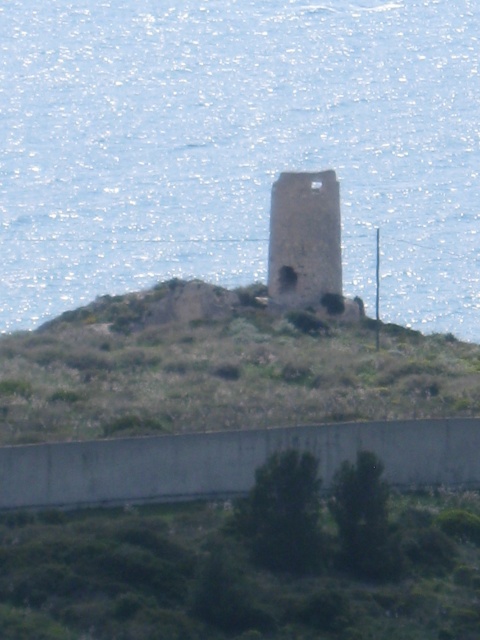
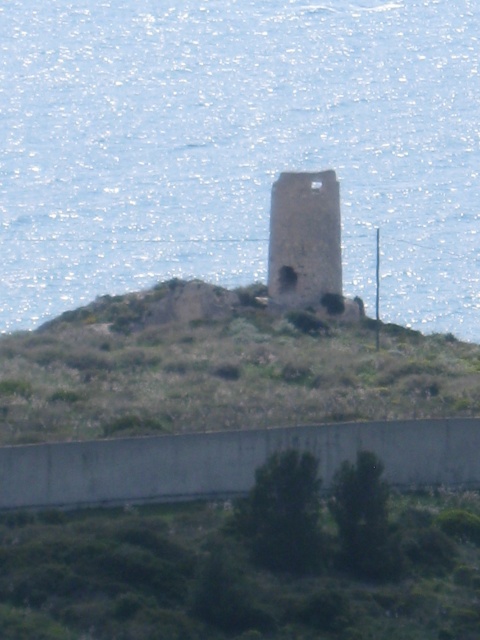
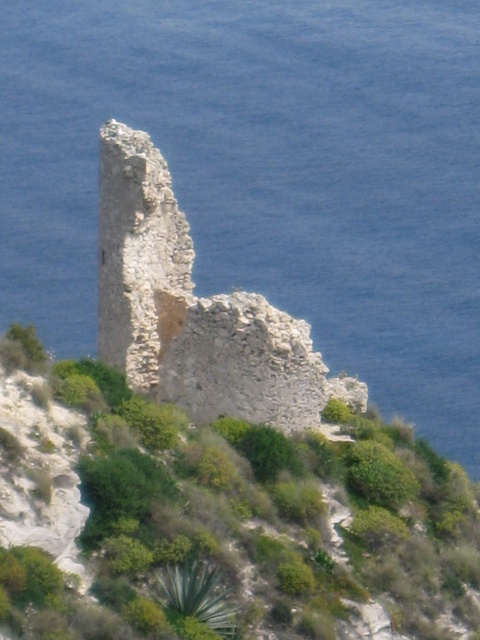
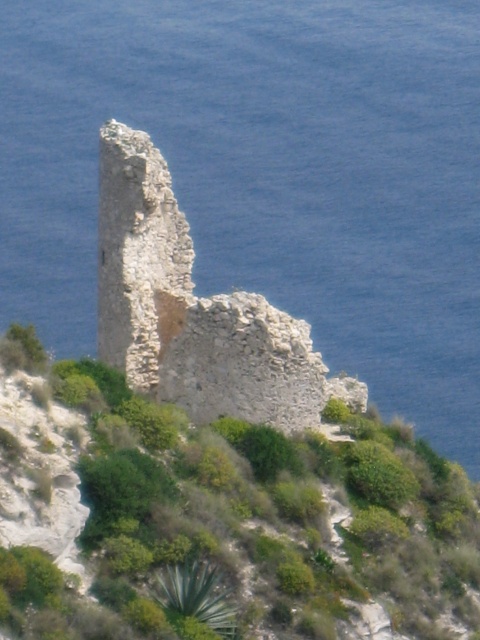
The Poetto Tower stands on the Devil’s Saddle (Sella del Diavolo) promontory, 91 meters above sea level and it dominates the small port of Marina Piccola and the homonymous beach. It was built in 1597 and the structure, originally truncated-conical and vaulted with a dome, today appears divided into two sections. From it you can spot the coastal towers of the Gulf of Cagliari, including the one of Mezza Spiaggia and that of L’Isola dei Cavoli. The tower made possible to spot any enemy incursions and to protect the area behind the salt pans, a source of wealth for the city of Cagliari.

Indirizzo
Sella del Diavolo
Poligono GEO

Torre del Poetto

Torre del Poetto

Sella del Diavolo

Fascia età
Fuori Cagliari
No
usato per affollamento
No
da usare solo per eventi e percorsi
Off
Comune
Immagine per il Portale
Torre del Poetto

Add new review

Your review will be visible after approval by the editors

To post a review you must be an authenticated user.
Log in with Social Login

Lion Tower

Immagine per l'APP
Torre del Leone (o dell'Aquila)
Categoria/Sottocategoria
macrocategoria
Descrizione

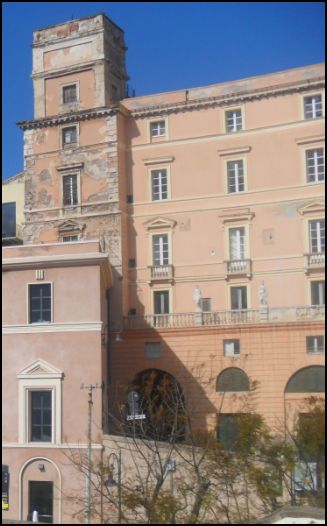
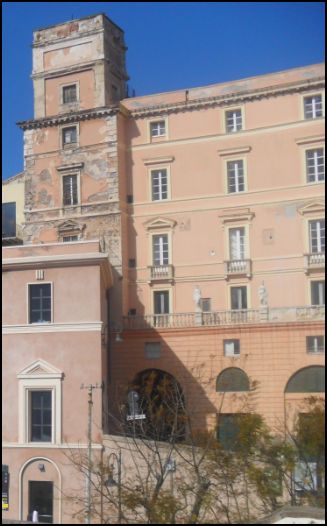
At the beginning of the 14th century, Pisa built imposing towers to strengthen its stronghold in South Sardinia. The Lion Tower was built in 1322 but it was never completed. Not very high and equipped with not particularly robust walls, due to the materials used in its construction, it soon lost its defensive function of the southern side of the Castle. Over time it became the headquarters of the general administrator of the kingdom, artillery warehouse and even astronomical and geodetic observatory. Severely damaged by fire in 1781, in 1840 it was completely incorporated into the adjacent Palazzo Boyl. The Lion Tower, currently not open to visitors, has not lost its function of entry to Castello district, overlooking the Portico delle Grazie, a charming barrel-vaulted passage, located between the streets De Candia and Lamarmora.

Indirizzo
Via De Candia
Poligono GEO

Torre del Leone (o dell'Aquila)

Torre del Leone (o dell'Aquila)

Via De Candia

Fascia età
Fuori Cagliari
No
Quartiere
usato per affollamento
No
da usare solo per eventi e percorsi
Off
Comune
Immagine per il Portale
Torre del Leone (o dell'Aquila)

Add new review

Your review will be visible after approval by the editors

To post a review you must be an authenticated user.
Log in with Social Login

Alberti Tower

Immagine per l'APP
Torre degli Alberti
Categoria/Sottocategoria
macrocategoria
Descrizione

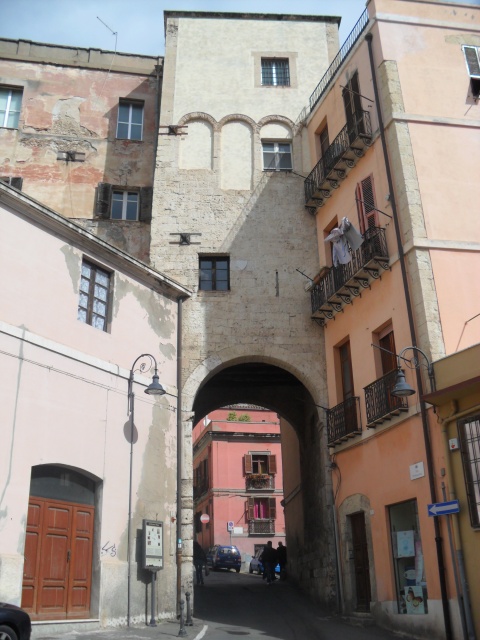
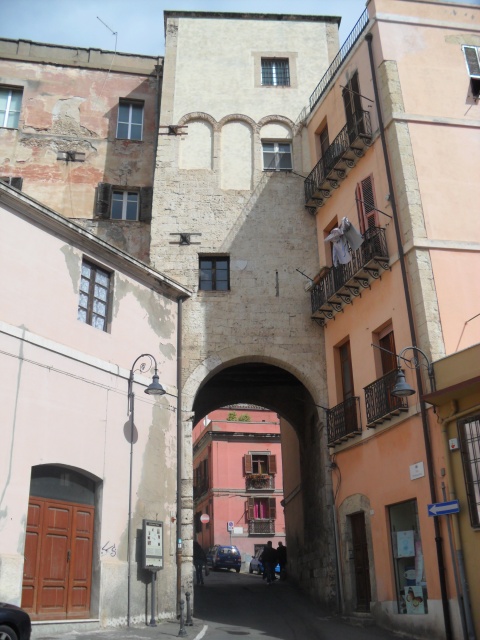
The only fortified entrance remained in Stampace district, that of ‘Portu Scalas’, is the oldest among the Pisan towers of Cagliari. It was built in 1293, a decade before the construction of the other towers in Castello district.

The tower, with a quadrangular map and about 20metres high, named also ‘dello Sperone’, has a loophole to testify the ancient defensive function.

It has become, over the centuries, part of San Michele Military Hospital; however, it still represent the entrance to the high part of Stampace.

Indirizzo
Via Ospedale, 1
Poligono GEO

Torre degli Alberti o dello Sperone

Torre degli Alberti o dello Sperone

Via Ospedale, 1

Fascia età
Fuori Cagliari
No
Quartiere
usato per affollamento
No
da usare solo per eventi e percorsi
Off
Comune
Immagine per il Portale
Torre degli Alberti

Add new review

Your review will be visible after approval by the editors

To post a review you must be an authenticated user.
Log in with Social Login

Guest House The Place

Categoria/Sottocategoria
Descrizione

The Place Cagliari, with its exclusive rooms and suites, opens its doors to those wishing to stay in an elegant and discreet atmosphere and to enjoy an atmosphere of refinement. Located in the old town of Cagliari, on the slopes of the ancient Castle,

The Place, is an old nineteenth-century building carefully restored to its former glory. The Place is a perfect destination for those staying for business or tourism. Its strategic location makes it prime location for day trips to the most beautiful beaches in the south of the island from Villasimius to Chia. In the nearby Piazza Matteotti are bus stops for the various seaside resorts and for the Poetto, the famous beach of Cagliari.

Indirizzo
Via Sant'Efisio, 59
Risorse multimediali
/sites/default/files/file_img_cagliari/the_place.jpg
Poligono GEO

Affittacamere The Place

Affittacamere The Place

Via Sant'Efisio, 59

Fascia età
Fuori Cagliari
No
Quartiere
usato per affollamento
No
da usare solo per eventi e percorsi
Off
Indirizzi email
theplacecagliari@gmail.com
Comune
Immagine per il Portale
The Place
Servizi offerti
Old Town

Add new review

Your review will be visible after approval by the editors

To post a review you must be an authenticated user.
Log in with Social Login

B&B Thanit

Categoria/Sottocategoria
orari
chiusura
Giorno/i di apertura
Descrizione
Check-in: 24/24. (call 30 minutes in advance)
Check-out: within 11.00 am
in data singola
No
Descrizione

B&B Thanit modern and functional apartment in a genteel building in a zone called San Benedetto, the commercial center of Cagliari.

We offer our hospitality and politeness to make you feel in homely environment, this means you will have a Mediterranean breakfast, accurate cleaning of the rooms as well as our willingness to provide you with comfortable stay.

Nearby the B&B you will find Monte Urpinu, the green lung of the city of Cagliari: a perfect place for long walks.

In addition, just a few metres from the B&B, there is bus stop from where you can go to the Old Town Area and the beach of Poetto.

Indirizzo
Via Pergolesi, 72
Risorse multimediali
/sites/default/files/file_img_cagliari/thanit.jpg
Poligono GEO

B&B Thanit

B&B Thanit

Via Pergolesi, 72

Fascia età
Fuori Cagliari
No
Quartiere
usato per affollamento
No
da usare solo per eventi e percorsi
Off
telefoni
Indirizzi email
info@bbthanit.it
Comune
Immagine per il Portale
Thanit
Servizi offerti
Air conditioning

Add new review

Your review will be visible after approval by the editors

To post a review you must be an authenticated user.
Log in with Social Login

Teatro Massimo

Immagine per l'APP
Teatro Massimo
Categoria/Sottocategoria
macrocategoria
orari
chiusura
Giorno/i di apertura
Descrizione
Ticket office (Via de Magistris 12):
in data singola
No
chiusura
Giorno/i di apertura
dalle
03:00 pm
alle
07:30 pm
Giorno da
Giorno a
in data singola
No
chiusura
Giorno/i di apertura
Giorno da
Giorno a
Descrizione
One hour before the show
in data singola
No
Descrizione

The Teatro Massimo was built between 1944 and 1947 thanks to the Merellos, a family who owned a large plot of land, seat of one among the most advanced mills in Italy (Molino Merello).

Designed by the local architects Oddone Devoto and Emilio Stefano Garau, the Teatro Massimo aimed to be a sort of artistic landmark for the city, which during the war had suffered the painful loss of its historical theatres, namely the Politeama Regina Margherita and the Civic Theatre. In fact, it succeeded very soon, thanks to the high quality of the musical, theatrical and cinematographic shows offered to its spectators.

In the 70's, however, the theatre started its decline, until 1982, when a fire caused by a short circuit led to its closure.
Taken over by the Municipality of Cagliari, the Teatro Massimo was fully restored to its former glory.

Indirizzo
Via De Magistris, 12 angolo Viale Trento
Poligono GEO

Teatro Massimo

Teatro Massimo

Via De Magistris, 12 angolo Viale Trento

Fascia età
Fuori Cagliari
No
Quartiere
usato per affollamento
No
da usare solo per eventi e percorsi
Off
Indirizzi email
info@sardegnateatro.it
Comune
Immagine per il Portale
massimo

Add new review

Your review will be visible after approval by the editors

To post a review you must be an authenticated user.
Log in with Social Login

Teatro Lirico (Opera House)

Immagine per l'APP
Teatro Lirico
Categoria/Sottocategoria
macrocategoria
Descrizione

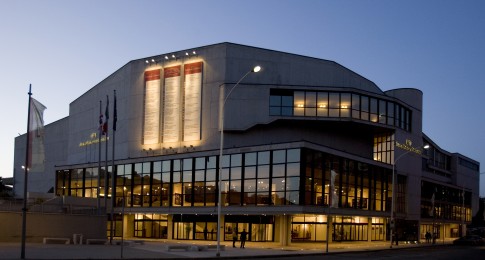
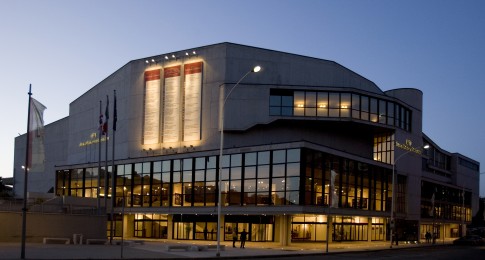
Cagliari Opera House was inaugurated in 1993, after a very long construction procedure. The tender notice for the construction of a building aimed to replace the old Civic Theatre, almost completely destroyed by the bombings of World War II, dates back to 1964.

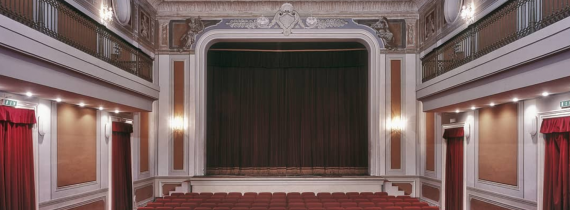
In 1967, the approval of the project designed by the architects Ginoulhiac e Galmozzi from Bergamo, started the construction of the modern building 5,000 square metres wide: foyer, 1650 seats between the stalls and the two galleries, an ample stage and orchestra pit. In the following years, rehearsal rooms, workshops, warehouses and offices were added, finishing the works with the renewal of the foyer and the opening of a bookshop, a cafe and a restaurant.

Cagliari Teatro Lirico, seat of the Foundation of the same name, features concert, opera and ballet seasons all year long. On its stage, together with the Teatro Lirico Orchestra and Chorus, protagonists of many prestigious productions, there have been excellent artists, who have contributed to a substantial revival of musical activities in town. Among others, the orchestra conductors Riccardo Muti, Georges Pretre, Mstislav Rostropovich, Zubin Mehta, Iván Fischer, Carlo Maria Giulini, Vladimir Ashkenazy, Pierre Boulez, Giuseppe Sinopoli, Lorin Maazel, Gennadi Rozhdestvensky, Rafael Frühbeck de Burgos, Neville Marriner, Carlos Kleiber, Valery Gergiev, Trevor Pinnock, Christopher Hogwood; the directors Dario Fo, Beni Montresor, Luca Ronconi, Hennings Brockhaus, Pier Luigi Pizzi, Graham Vick, Denis Krief, Deflo Gilbert, Stephen Medcalf, Giancarlo Cobelli; the soloists Maurice Bourgue, Kashkashian, Murray Perahia, Mikhail Pletnev, Viktoria Mullova, Truls Mørk, Sabine Meyer, Vadim Repin, Yuri Bashmet, Salvatore Accardo, Bruno Canino, Uto Ughi, Trevor Pinnock, Maxim Vengerov, Katia and Marielle Labèque, Julian Rachlin, Fazil Say, Maurizio Pollini; the music complexes of La Scala Philharmonic, London Philharmonic Orchestra, Chamber Orchestra of Europe, Sächsische Staatskapelle Dresden, the Philharmonia Orchestra, the Israel Philharmonic Orchestra, Royal Philharmonic Orchestra, Choir, and symphony des Bayerischen Rundfunk Orchestra, St. Petersburg Philharmonic, Budapest Festival Orchestra, New York Philharmonic

In recent years, the Opera House has also homaged many italian contemporary composers, such as Aldo Clementi, Sylvano Bussotti, Azio Corghi, Marco Tutino, who were commissioned new compositions. Particularly important are the new lyrical productions and the premieres never performed in Italy: Sebastian (from The martyre de Saint-Sébastien by Claude Debussy), Dalibor by Bedrich Smetana, Die Feen by Richard Wagner, Cherevichki Oprichnik by Pyotr Ilyich Tchaikovsky, Die ägyptische Helena and Capriccio by Richard Strauss, Euryanthe by Carl Maria von Weber, A Village Romeo and Juliet by Frederich Delius, Alfonso und Estrella by Franz Schubert, Hans Heiling by Heinrich Marschner, Oedipe by George Enescu, Chérubin by Jules Massenet, Die Vögel by Walter Braunfels, Semyon Kotko by Sergei Prokofiev.

For the quality and innovative nature of its programming, Cagliari Opera House received the 2001 Franco Abbiati prize (section "Initiatives"). Italian music critics have also given a prestigious recognition to Denis Krief and Marcelo Alvarez for Lucia di Lammermoor and to Stephen Medcalf for Carmen, both produced by Cagliari Teatro Lirico in 2000 and in 2005.


- Photo by Priamo Tolu

Indirizzo
Via Sant'Alenixedda
Risorse multimediali
/sites/default/files/file_img_cagliari/teatro_lirico_interno_2_copia.jpg
/sites/default/files/file_img_cagliari/sala_con_pubblico_i2b6819.jpg
/sites/default/files/file_img_cagliari/sala_con_pubblico__i2b9143_foto.jpg
Poligono GEO

Teatro Lirico

Teatro Lirico

Via Sant'Alenixedda

Fascia età
Fuori Cagliari
No
Quartiere
usato per affollamento
No
da usare solo per eventi e percorsi
Off
Indirizzi email
biglietteria@teatroliricodicagliari.it
Comune
Immagine per il Portale
Teatro Lirico

Add new review

Your review will be visible after approval by the editors

To post a review you must be an authenticated user.
Log in with Social Login

Theatre of Saline

Immagine per l'APP
Teatro delle Saline
Categoria/Sottocategoria
macrocategoria
Descrizione

The Theatre of Saline was built in 1931. It takes its name from the place where it lies, The Saline of Cagliari, near to Molentargius Pond. The Theatre' s style is Art Nouveau: polychrome frescos, baroque paintings, stuccos and decorative patterns. It represents a rare example of theatrical architecture and it was redecorated by the Theatre Company Akròama in 1991. Every year the Theatre hosts meetings, congress and publics and privates events. There is also a library inside the structure.

Indirizzo
Piazzetta Billy Sechi, 3-4
Poligono GEO

Teatro delle Saline

Teatro delle Saline

Piazzetta Billy Sechi, 3-4

Fascia età
Fuori Cagliari
No
Quartiere
usato per affollamento
No
da usare solo per eventi e percorsi
Off
peso
telefoni
Indirizzi email
info@teatrodellesaline.it
Comune
Immagine per il Portale
Teatro delle Saline

Add new review

Your review will be visible after approval by the editors

To post a review you must be an authenticated user.
Log in with Social Login

Teatro del Segno - TS'E

Immagine per l'APP
Teatro del Segno - TS'E
Categoria/Sottocategoria
macrocategoria
Descrizione

Is Mirrionis district has its own theatre, inaugurated in 2017 and located inside the church of Sant'Eusebio.

The new theatre is managed by the Company Teatro del Segno, that organises not only shows but also workshops, exhibitions and festivals.

Indirizzo
Via Quintino Sella
Poligono GEO

Teatro del Segno - TS'E

Teatro del Segno - TS'E

Via Quintino Sella

Fascia età
Fuori Cagliari
No
Quartiere
usato per affollamento
No
da usare solo per eventi e percorsi
Off
Indirizzi email
teatrodelsegno@gmail.com
Comune
Immagine per il Portale
Teatro del Segno - TS'E

Add new review

Your review will be visible after approval by the editors

To post a review you must be an authenticated user.
Log in with Social Login

Teatro Civico di Castello (Old Town Theatre)

Immagine per l'APP
Teatro Civico di Castello
Categoria/Sottocategoria
macrocategoria
Descrizione

According to the documents, the first theatre in Cagliari was the "University Theatre", a small structure with only thirty loggias and a capacity of about three hundred spectators, built shortly before 1750 at the crossroad between Via Canelles and Via Lamarmora.

In 1764, it was demolished and replaced, shortly before 1770, by the “Royal Theatre” built on the initiative of the Baron Zapata.

Elegant and with a seating capacity of about 600 spectators, it quickly became the heart of cultural and social life in town.

In 1831, by order of King Carlo Felice, it was purchased by the Municipality, renamed "Civic Theatre" and immediately brought back to the top with high level seasons.

Starting from 1859, it had a dangerous competitor: the "Diurnal Theatre" (later called "Cerruti"), built in Viale Regina Margherita, at that time an area strongly expanding, with an almost double seating capacity and the possibility to organize all types of shows.

The Civic Theatre was essentially an Opera House, that rarely and reluctantly organised other types of shows, including prose. Throughout the long period between 1830 and the beginning of the 20th Century, the prose seasons were only a dozen, and performed by companies less valid than the ones meanwhile working at the Cerruti. In the same period, the Civic Theatre never offered operetta and, due to its small size, could not organise real circus shows but only some illusionism events.

In 1897, the Cerruti was substituted by the Politeama, an elegant, vast and multifunctional structure, which started its activity with high profile seasons of opera, operetta and prose.

The Politeama competed with the Civic Theatre for the famous tenor Piero Schiavazzi, who was synonymous with a successful season.

Due to the evidently unsustainable competition with the Politeama, in 1911 the Municipality, sold the Civic Theatre to the company Cadeddu, that turned it into a cinematograph.

It was only under the new management that the Civic Theatre offered some operetta, variety and prose seasons, in addition to the concert seasons started in the early 1920's.

The last opera, I quatro rusteghi by Ermanno Wolf Ferrari, was performed in 1939, in the presence of Umberto and Maria Jose of Savoy.

On 26th February 1943, during one of the devastating bombings on Cagliari, the Civic Theatre was centered by the bombs. Only the foyer and the perimeter walls survived, and that serious loss took place just a few months after the fire that had already destroyed the Politeama on 17th December 1942.

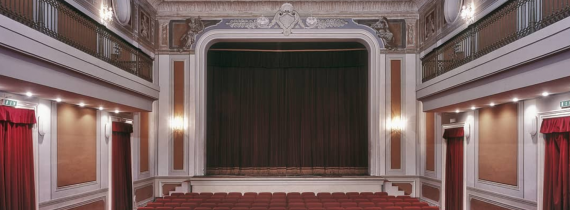
After the recent restoration, accomplished in April 2006, the Civic Theatre has restarted its activities with cultural events, concerts, theatre and cinema.

Indirizzo
Via De Candia
Poligono GEO

Teatro Civico di Castello

Teatro Civico di Castello

Via De Candia

Fascia età
Fuori Cagliari
No
Quartiere
usato per affollamento
No
da usare solo per eventi e percorsi
Off
peso
Indirizzi email
cultura@comune.cagliari.it
Comune
Immagine per il Portale
Teatro civico di Castello

Add new review

Your review will be visible after approval by the editors

To post a review you must be an authenticated user.
Log in with Social Login