Crobu Inc.

Immagine per l'APP
Crobu Inc.
Categoria/Sottocategoria
macrocategoria
orari
chiusura
Giorno/i di apertura
dalle
10:00 am
alle
01:00 pm
Giorno da
Giorno a
in data singola
No
chiusura
Giorno/i di apertura
dalle
05:00 pm
alle
09:00 pm
Giorno da
Giorno a
in data singola
No
Descrizione

The Crobu Art Gallery exhibits exhibitions and works of ancient and contemporary art, with particular attention to Sardinian masters of the twentieth century.

Indirizzo
Piazza Martiri, 10
Poligono GEO

Crobu Inc.

Crobu Inc.

Piazza Martiri, 10

Fascia età
Fuori Cagliari
No
Quartiere
usato per affollamento
No
da usare solo per eventi e percorsi
Off
telefoni
Comune
Immagine per il Portale
Crobu Inc.

Add new review

Your review will be visible after approval by the editors

To post a review you must be an authenticated user.
Log in with Social Login

Crypt of Santo Sepolcro

Immagine per l'APP
Cripta di Santo Sepolcro
Categoria/Sottocategoria
macrocategoria
prezzi
Descrizione
Admission is free but donations are welcome.
orari
chiusura
Giorno/i di apertura
dalle
10:00 am
alle
12:00 pm
Giorno da
Giorno a
in data singola
No
chiusura
Giorno/i di apertura
dalle
04:30 pm
alle
07:00 pm
Giorno da
Giorno a
in data singola
No
chiusura
Giorno/i di apertura
dalle
04:30 pm
alle
07:00 pm
Giorno da
Giorno a
in data singola
No
chiusura
Giorno/i di apertura
dalle
04:30 pm
alle
06:45 pm
Giorno da
Giorno a
in data singola
No
Descrizione

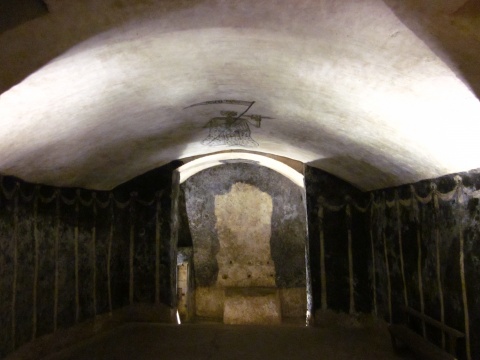
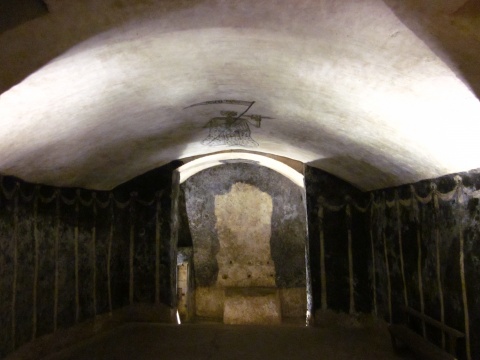
The history of the crypt reflects the one of the Confraternity of the Oration and Death, also called Confraternity of Santo Sepolcro, whose members buried the corpses of the poor in this subterranean area.
Its entrance is a trapdoor located in the middle of the nave; the area consists of three barrel-vaulted rooms with a tomb probably destined to an illustrious man. On the walls, the visitor can see various frescoes; the most relevant painting portrays the Death as a skeleton wrapped in an ermine mantle and holding a scythe in a hand. On the blade, the visitor can read the Latin words Nemini parco (I spare no one).

Indirizzo
Piazza San Sepolcro
Poligono GEO

Cripta di Santo Sepolcro

Cripta di Santo Sepolcro

Piazza San Sepolcro

Fascia età
Fuori Cagliari
No
Quartiere
usato per affollamento
No
da usare solo per eventi e percorsi
Off
telefoni
Comune
Immagine per il Portale
Cripta di Santo Sepolcro

Add new review

Your review will be visible after approval by the editors

To post a review you must be an authenticated user.
Log in with Social Login

Crypt of Santa Restituta

Immagine per l'APP
Cripta di Santa Restituta
Categoria/Sottocategoria
macrocategoria
prezzi
prezzo
€3.00
Descrizione
Full price ticket
prezzo
€2.00
Descrizione
Reduced price ticket for students under 26 y.o., visitors over 65 y.o. and and Cagliari Botanical Garden ticket holders
prezzo
€1.00
Descrizione
REDUCED PRICE FOR SCHOOLCHILDREN
prezzo
€8.00
Descrizione
COMBINED TICKET CULTURAL SITES: ROMAN AMPHITHEATRE, CRYPT OF SANTA RESTITUTA, THE VIPER'S CAVE, ELEPHANT TOWER, COVERED WALKWAY AND SPERONE GALLERY VALID FOR 1 WEEK
Descrizione
Free admission for children under 4 years old people with disabilities and their carers, for tour guide
orari
chiusura
Giorno/i di apertura
Giorno da
Giorno a
Descrizione
FROM APRIL 28TH TO SEPTEMBER 30TH. From 10 am to 1 pm and from 3 pm to 7 pm (ticket office closes 30 minutes before the closing time)
in data singola
No
chiusura
Giorno/i di apertura
Giorno da
Giorno a
Descrizione
FROM OCTOBER 1ST TO APRIL 27TH. From 10 am to 5 pm (ticket office closes 30 minutes before the closing time)
in data singola
No
chiusura
Giorno/i di chiusura
Data da - a
in data singola
Si
chiusura
Giorno/i di chiusura
Data da - a
in data singola
Si
Descrizione

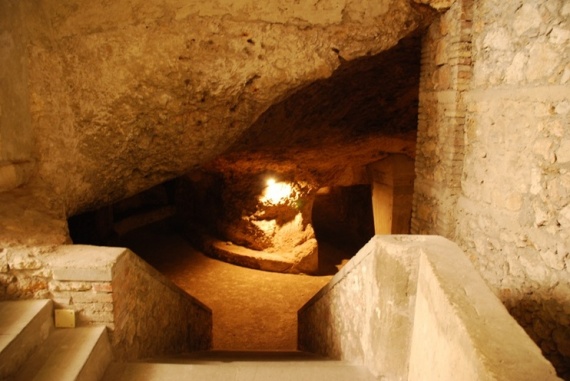
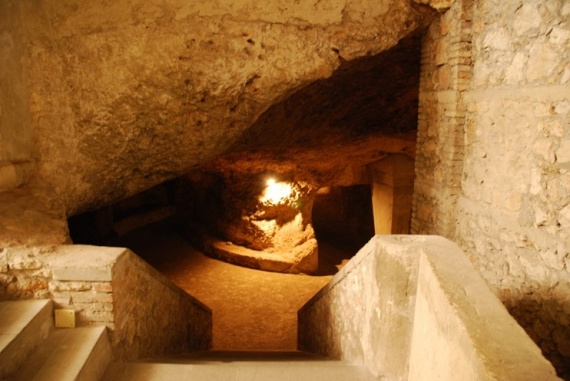
Throughout history the crypt has had different uses: in the late-Punic Period it was probably a quarry of limestone blocks; subsequently it became a place of worship; it was later re-used as an amphoras storage until the first century AD; then it was abandoned for twelve centuries, before being re-used as a place of worship. There was another period of neglect, caused by the increasing success of the nearby new churches of St. Anna and St. Francesco. At the beginning of the sixteenth century it was rediscovered and cleaned again. The crypt consists of a large central room connected to the outside by two staircases carved into the rock. The walls were decorated with paintings, of which it is now visible that of St. John the Baptist with his right hand in blessing, dated to the thirteenth century. On the main altar is placed the marble statue of Santa Restituta, while on the minor altar were the simulacrums of the Saints Giusta, Giustina and Enedina.

Following the finding of the relics in 1614, the Bishop of Cagliari, Francisco Desquivel, ordered some embellishment works: the raising of the altar and the creation of three recesses, in the central one there were the relics of the four saints and the statue of Restituta; and in both sides, probably, there were the statues of Eusebio, Bishop of Vercelli, and abbess Eusebia, that were, according to tradition, the children of Santa Restituta. On the west side there is another altar placed on an existing cistern and bell. On the same side, there is also a space called Schola Sanctae Restitutae, which is the place where, according to tradition, the saint would have given lessons to the children of the neighborhood. During the Second World War, the crypt was re-used by Cagliaritani people as a shelter; the saint's relics were hidden in the church of St. Anne to protect them from bombing. They lay abandoned until the rediscovery in 1997, in a seventeenth-century wooden urn, covered with fabric and bearing a scroll that identifies them as relics of Santa Restituta.

Indirizzo
Via Sant'Efisio, 14
Poligono GEO

Cripta di Santa Restituta

Cripta di Santa Restituta

Via Sant'Efisio, 14

Fascia età
Fuori Cagliari
No
Quartiere
usato per affollamento
No
da usare solo per eventi e percorsi
Off
telefoni
Indirizzi email
info.beniculturalicagliari@gmail.com
Comune
Immagine per il Portale
Cripta di Santa Restituta

Add new review

Your review will be visible after approval by the editors

To post a review you must be an authenticated user.
Log in with Social Login

Crypt of Sant'Agostino

Immagine per l'APP
Cripta di Sant'Agostino
Categoria/Sottocategoria
macrocategoria
orari
chiusura
Giorno/i di apertura
Descrizione
Temporarily closed
in data singola
No
Descrizione

The crypt is actually what has come to us from the church and from the convent of the Augustinians; here the tradition identifies the place where they were kept, from 504 to 722 d. C., the mortal remains of St. Augustine, who came to Cagliari with the arrival of Fulgenzio di Ruspe and other bishops from North Africa.

The cave, in all probability, already used in Roman times, became a place of worship and crypt of a Gothic style church built in the fifteenth century, with an adjoining convent dedicated to the saint. In the second half of the sixteenth century, both the church and the convent were demolished to allow the works ordered by Philip II of Spain, for the renovation of the city walls. The King commissioned the construction of the new temple and the new convent, both erected in Marina district.

Of the ancient church remains only a small chapel, above the crypt. At the end of the nineteenth century the chapel was demolished to make room for Palazzo Accardo and only the ancient crypt remained.

Inside you can admire a marble altar in classical style that, by the will of Elena Brondo, marquise from Villacidro, was erected in honor of the place where the body of the saint was kept. In a niche there is a statue that depicts him; the frontal is also visible with a low relief depicting Saint Augustine between two angels; the inscription concerns the erection's date of the altar. At its back can be found the cavity which, according to tradition, contained the relics of the saint; the small water source here, was once considered miraculous.

Indirizzo
Largo Carlo Felice
Poligono GEO

Cripta di Sant'Agostino

Cripta di Sant'Agostino

Largo Carlo Felice

Fascia età
Fuori Cagliari
No
Quartiere
usato per affollamento
No
da usare solo per eventi e percorsi
Off
peso
Comune
Immagine per il Portale
Cripta di Sant'Agostino

Add new review

Your review will be visible after approval by the editors

To post a review you must be an authenticated user.
Log in with Social Login
Crypt of San Domenico

Immagine per l'APP
Cripta di San Domenico
Categoria/Sottocategoria
macrocategoria
Descrizione

The entrance on the west arm of the church of San Domenico leads to the crypt or lower church, consisting of the remains of the ancient convent structure.

The crypt still preserves the plan of the ancient church: a nave divided into two spans with vaulted cross vaults, side chapels and presbytery. The vaults and the upper part of the perimeter walls were lost during the bombings in 1943. The only room left intact is the chapel of the "Madonna del Rosario", the last on the left proceeding towards the presbytery, connected to the nave by a short corridor with barrel vault decorated with rosettes alternating with raised diamond points. In the Sanctuary of the Martyrs there is a similar decoration which is accessible through a triumphal arch framed by pilasters and surmounted by a tympanum.

The crypt of San Domenico is currently used both for religious services and for cultural events, such as concerts and art exhibitions in general.


Indirizzo
Via XXIV Maggio, 5
Poligono GEO

Cripta di San Domenico

Cripta di San Domenico

Via XXIV Maggio, 5

Fascia età
Fuori Cagliari
No
Quartiere
usato per affollamento
No
da usare solo per eventi e percorsi
Off
peso
Comune
Immagine per il Portale
Cripta di San Domenico

Add new review

Your review will be visible after approval by the editors

To post a review you must be an authenticated user.
Log in with Social Login
Crypt of the Cathedral of Santa Maria

Immagine per l'APP
Cripta della Cattedrale di Santa Maria
Categoria/Sottocategoria
macrocategoria
Descrizione

The 179 niches of the crypt were discovered during excavations carried out under the presbytery by the will of the archbishop de Esquivel, at the beginning of the 17th century. Above each niche there is a marble bas-relief panel of the saint with its name and the symbols of martyrdom. The Sanctuary, entirely excavated on the living rock, was inaugurated on November 27, 1618, after a solemn procession with the relics of the Martyrs, in the presence of religious and civil authorities and with the participation of all the Christian people. In the Sanctuary, there are architectural and artistic elements of the Renaissance, Baroque and Neoclassicism. On the landing that is located under the marble stairs leading to the Sanctuary, there is the marble sarcophagus of the archbishop Francisco de Esquivel, made by Antonio Zelpi, and a 17th century Spanish school painting depicting the Crucifixion on which the same archbishop and martyrs from Cagliari. On the sides of the sarcophagus there are also two plaques commemorating the erection and consecration of the Sanctuary on 11 November 1618, and the translation of the relics, which took place on 27 November of the same year.

The Martyrs' Sanctuary consists of three rooms:

in the Central Chapel or of the “Madonna dei Martiri” there are 66 niches. Above the altar there is a statue of the “Madonna and Child and San Giuseppe and Sant'Anna” on the sides. Above the two side doors two plaques commemorate the responses of Pope Paul V and the king of Spain Philip III to the discovery of the relics.

In the Chapel of San Lucifero, dedicated to the homonymous bishop of Cagliari, there are 80 niches. The bones of the saint, found on June 21, 1623 and moved on May 20, 1626, are placed under the altar table; above the altar is instead placed his statue. Above the entrance door are posted the original inscription, which was located in the saint's tomb and the triangular piece of marble found on the bishop's chest. In the chapel there is also a Roman sarcophagus containing the bones of Saint Antiochus and the white marble mausoleum of Maria Giuseppina di Savoia, wife of Louis XVIII king of France, who died in exile in London in 1810 and moved to Cagliari, to his will, in 1811.

The Chapel of Saint Saturnino, dedicated to the patron saint of the city of Cagliari, was built around 1620 and contains 33 niches. Above the altar, a 2nd century Roman sarcophagus (found in 1621 in the basilica of Saint Saturnino) preserves the saint's relics. Above it, in a niche, there is the statue of Saint Saturnino. Inside the chapel there are two other Roman sarcophagi: one located above the entrance door which contains relics of 10 saints, the other placed on the wall behind the monument dedicated to Carlo Emanuele di Savoia contains relics of 9 saints. At the end of the chapel there is the mausoleum of Carlo Emanuele di Savoia, who died of smallpox at the age of two. The monument, built in 1799, is the work of Antonio Cano. Above, two marble lunettes made in the early eighteenth century depict San Pietro and the Madonna del Carmine.

Indirizzo
Piazza Palazzo
Poligono GEO

Cripta della Cattedrale di Santa Maria

Cripta della Cattedrale di Santa Maria

Piazza Palazzo

Fascia età
Fuori Cagliari
No
Quartiere
usato per affollamento
No
da usare solo per eventi e percorsi
Off
telefoni
Indirizzi email
cattedraledica@tiscali.it
Comune
Immagine per il Portale
Cripta della Cattedrale di Santa Maria

Add new review

Your review will be visible after approval by the editors

To post a review you must be an authenticated user.
Log in with Social Login
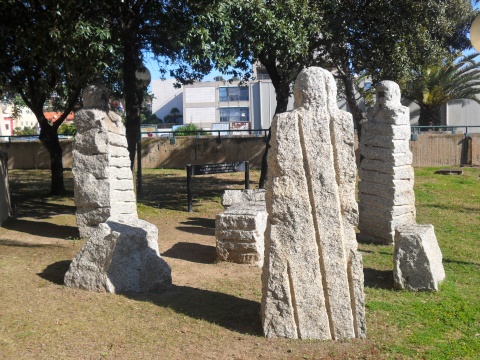
B&B Cramu

Categoria/Sottocategoria
orari
chiusura
Giorno/i di apertura
Descrizione
24h/24h
in data singola
No
Descrizione

Cramu Bed&Breakfast offers rooms in Cagliari near Cagliari Port, the property is also close to Bastione di Saint Remy. Poetto Beach is 6 km away. At the bed and breakfast, all rooms have air conditioning, a wardrobe and a flat-screen TV, and certain units at Cramu Bed&Breakfast have a terrace.

Indirizzo
Viale Trieste, 6
Risorse multimediali
/sites/default/files/file_img_cagliari/21e2772e_84d6_4967_af60_6fecafa2d290.jpeg
Poligono GEO

B&B Cramu

B&B Cramu

Viale Trieste, 6

Fascia età
Fuori Cagliari
No
Quartiere
usato per affollamento
No
da usare solo per eventi e percorsi
Off
telefoni
Indirizzi email
info@cramu.it
Comune
Immagine per il Portale
Cramu Bed&Breakfast
Servizi offerti
Air conditioning

Add new review

Your review will be visible after approval by the editors

To post a review you must be an authenticated user.
Log in with Social Login
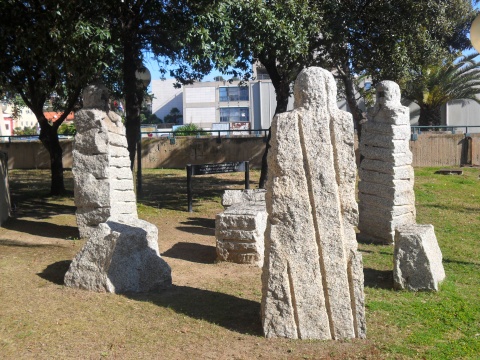
Convent of N.S. of Bonaria

Immagine per l'APP
Convento parrocchia Nostra Signora di Bonaria
Categoria/Sottocategoria
macrocategoria
Descrizione

The Sanctuary of “Our Lady of Bonaria” is a complex in the city of Cagliari located in Bonaria Square on the top of the homonymous hill. It is the most important sanctuary in Sardinia for the Catholic church, consisting of a small church flanked by a larger temple, raised to the title of Pontifical Minor Basilica by Pius XI in 1926. The Sanctuary of the Virgin of Bonaria is officiated by the Mercedarian fathers, who live in the adjacent convent, and is the parish seat of the Bonaria district. The Order of “Santa Maria della Mercede” is an order of the Catholic church. The order was founded by San Pietro Nolasco who, having seen the condition of many Christian slaves in his travels, dedicated himself, with some companions, to the liberation of those oppressed brothers.


Indirizzo
Piazza Bonaria, 4
Poligono GEO

Convento parrocchia Nostra Signora di Bonaria

Convento parrocchia Nostra Signora di Bonaria

Piazza Bonaria, 4

Fascia età
Fuori Cagliari
No
Quartiere
usato per affollamento
No
da usare solo per eventi e percorsi
Off
Comune
Immagine per il Portale
Convento parrocchia Nostra Signora di Bonaria

Add new review

Your review will be visible after approval by the editors

To post a review you must be an authenticated user.
Log in with Social Login

Convent of Saint Rosalia

Immagine per l'APP
Convento di Santa Rosalia
Categoria/Sottocategoria
macrocategoria
Descrizione

In the 15th century, an oratory dedicated to Santa Rosalia existed on the site of the present church. In 1740 the church was granted to the Observant Friars without headquarters since 1718, the year of the demolition of the convent of Santa Maria di Gesù (located in Regina Margherita avenue). Expecting the arrival of the friars, the church of Santa Rosalia, flanked by a convent, was subjected to new works by the military architect Augusto della Vallea, who transformed the temple into a Piedmontese Baroque style.

The most important part of the temple, from an artistic point of view, is the Baroque facade, together with the adjacent portico, which in the past had the function of connecting the two parts of the convent.

Indirizzo
Via Principe Amedeo, 24
Poligono GEO

Convento di Santa Rosalia

Convento di Santa Rosalia

Via Principe Amedeo, 24

Fascia età
Fuori Cagliari
No
Quartiere
usato per affollamento
No
da usare solo per eventi e percorsi
Off
Comune
Immagine per il Portale
Convento di Santa Rosalia

Add new review

Your review will be visible after approval by the editors

To post a review you must be an authenticated user.
Log in with Social Login

Convent of Saint Ignazio

Immagine per l'APP
Convento di Sant'Ignazio
Categoria/Sottocategoria
macrocategoria
Descrizione

The main convent of the Sardinian Capuchin friars, the place of residence of the Provincial Father, is built on an ancient pagan site on the hill of Buoncammino. Under the convent there are the famous Punic caves transformed by the Romans into stone quarries to build the amphitheatre, to which they are connected by an underground tunnel. Recent findings have highlighted a graffiti of exceptional importance for the presence of Christian martyrs in the caves and for the dating of the evangelization of Sardinia. In the sec. XVII the Capuchin friars had used the convent as a hospital and buried the victims of the plague in the caves. The convent was therefore founded on the place of sacrifice of the first Christian martyrs and on the places of heroic charity of the first Capuchin friars. The convent, also called the Convento Maggiore, was built on 11 October 1591. A small group of the Capuchin reform in 1525 arrived in Sardinia, headed by p. Zefferino from Bergamo, sent to found the Capuchin Province of Sardinia. The convent and the church are dedicated to S. Antonio of Padua. Today's appellation of "Church of S. Ignazio" is quite recent, due to the permanence and death of Fra 'Ignazio da Laconi (1701 - 1781) in this convent; but it is mainly following the Beatification (1940) and the Sanctification (1951) of St. Ignatius that the convent is so familiarly called by the people. The convent was born as a place of prayer and penance, a place of evangelization, with popular preachers, and of welcoming the poor: the Capuchin friars served a hot dish, "the soup of the poor", every day, to all those who came to the convent door.

Indirizzo
Viale S. Ignazio da Laconi, 94
Poligono GEO

Convento di Sant'Ignazio

Convento di Sant'Ignazio

Viale S. Ignazio da Laconi, 94

Fascia età
Fuori Cagliari
No
Quartiere
usato per affollamento
No
da usare solo per eventi e percorsi
Off
Comune
Immagine per il Portale
Convento di Sant'Ignazio

Add new review

Your review will be visible after approval by the editors

To post a review you must be an authenticated user.
Log in with Social Login