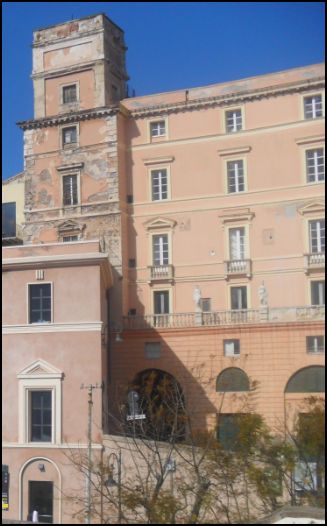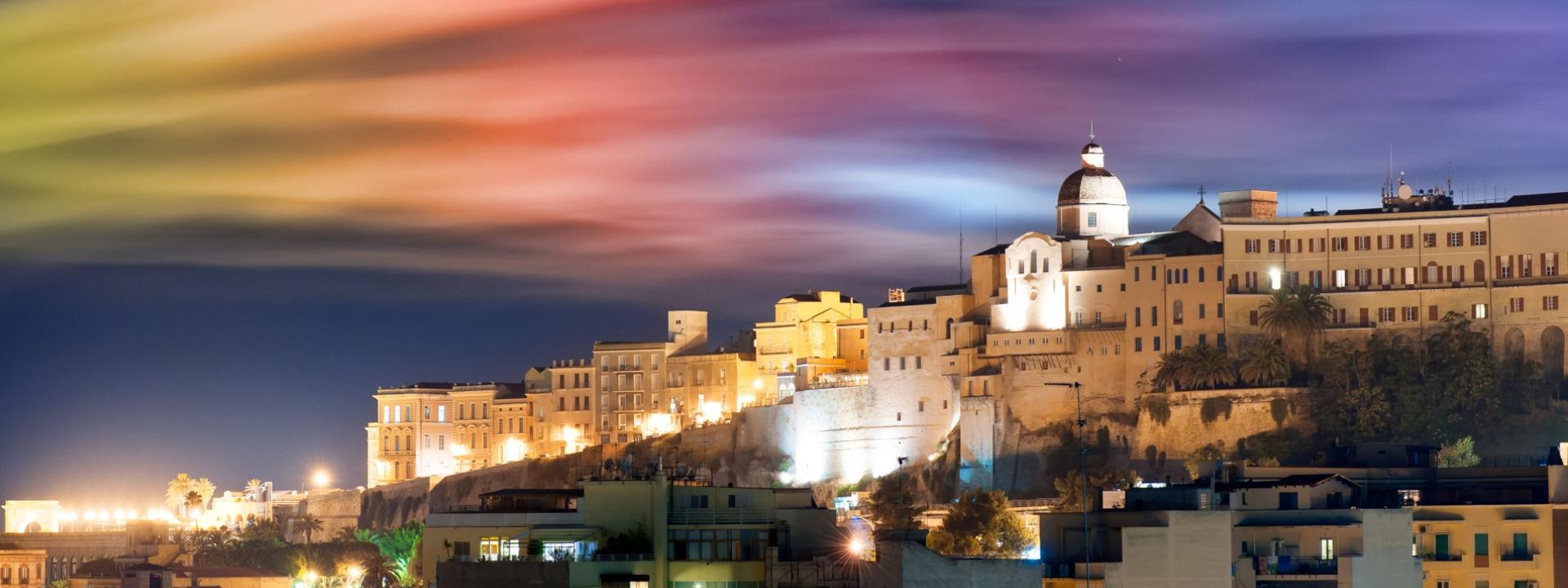
Post Office Cagliari 1
Ufficio Postale Cagliari 1
Via Fara, 11
Add new review
Your review will be visible after approval by the editors
To post a review you must be an authenticated user.
Log in with Social Login
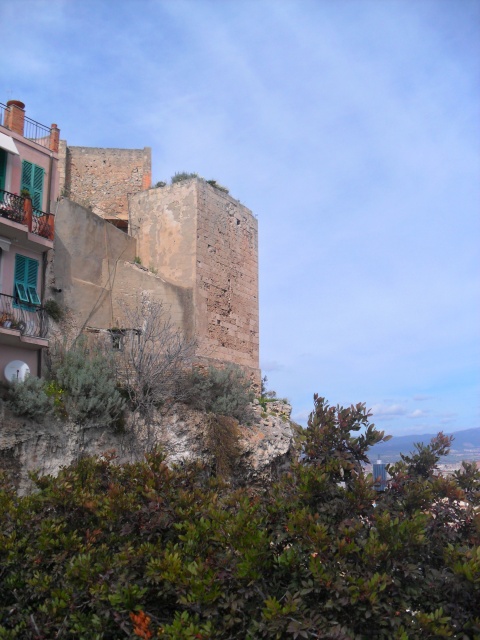
Ufficio Postale Cagliari 1
Via Fara, 11
Your review will be visible after approval by the editors
To post a review you must be an authenticated user.
Log in with Social Login
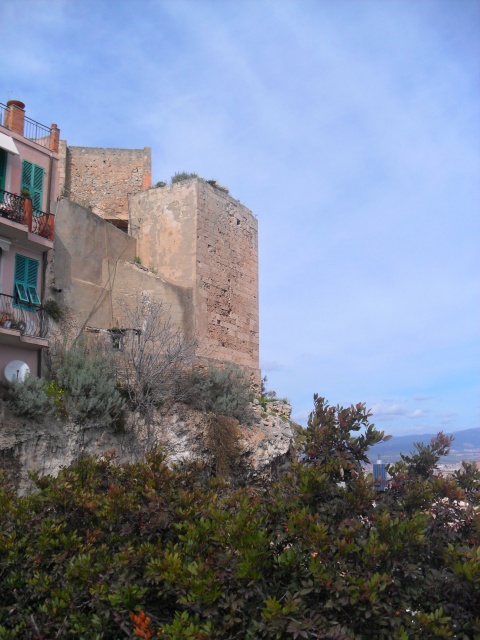
From the new station ' Elmas Airport ' you can reach the Cagliari central stationn in about 6 minutes.
Treno da/per aeroporto
Piazza Matteotti
Your review will be visible after approval by the editors
To post a review you must be an authenticated user.
Log in with Social Login
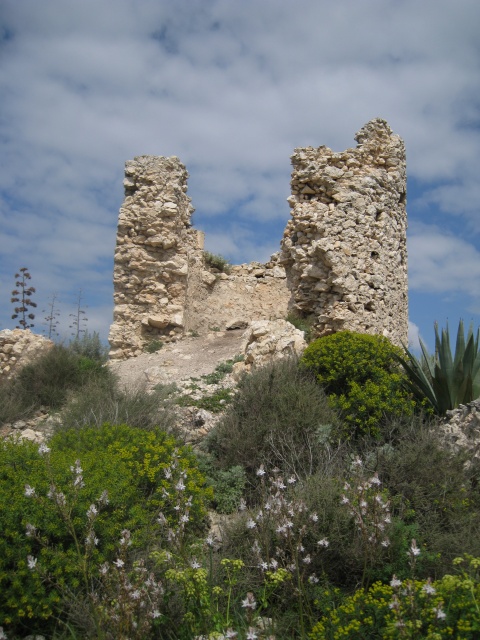
With Trenino Cagliaritano you can explore the most important and striking places of Cagliari.
With Trenino Cagliaritano you can easily visit the most important places of the town from the historical, cultural and landscape point of view. The small size allows to walk down the narrow streets of the medieval district of Castello, the central areas of commercial interest and the alleys of the ancient Cagliari. From the characteristic red and blue color (the colors of the city), this little train is equipped with a locomotive and several carriages that can accommodate up to fifty passengers. During the journey, a guide on board will show, in different languages, the various stages of the itinerary which lasts about 45 minutes.
The terminus is in Piazza del Carmine, the ticket costs ten euros and can be purchased on board; children up to three years old travel free and discounts are available for groups.
Small pets are allowed.
Trenino Cagliaritano
Piazza del Carmine - Via Sassari
Your review will be visible after approval by the editors
To post a review you must be an authenticated user.
Log in with Social Login
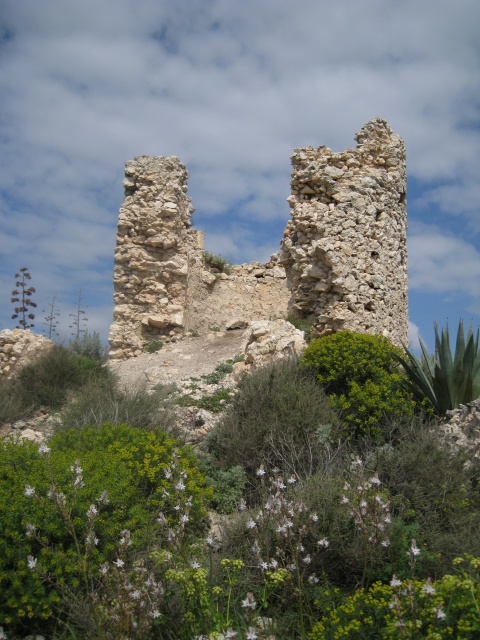
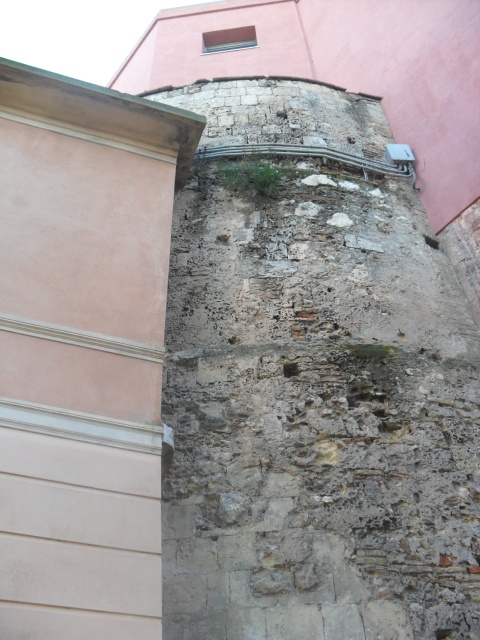
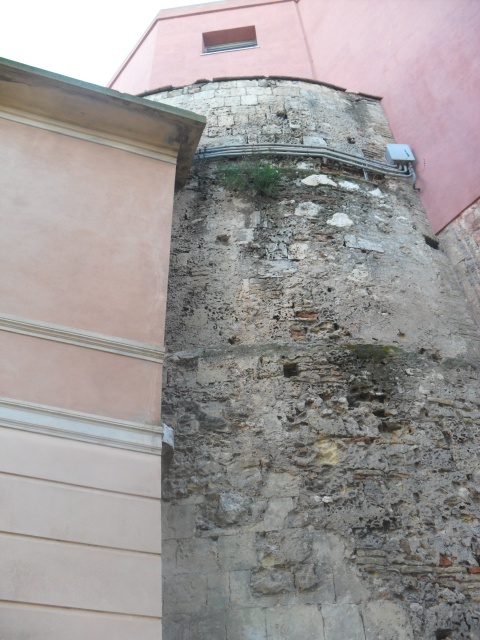
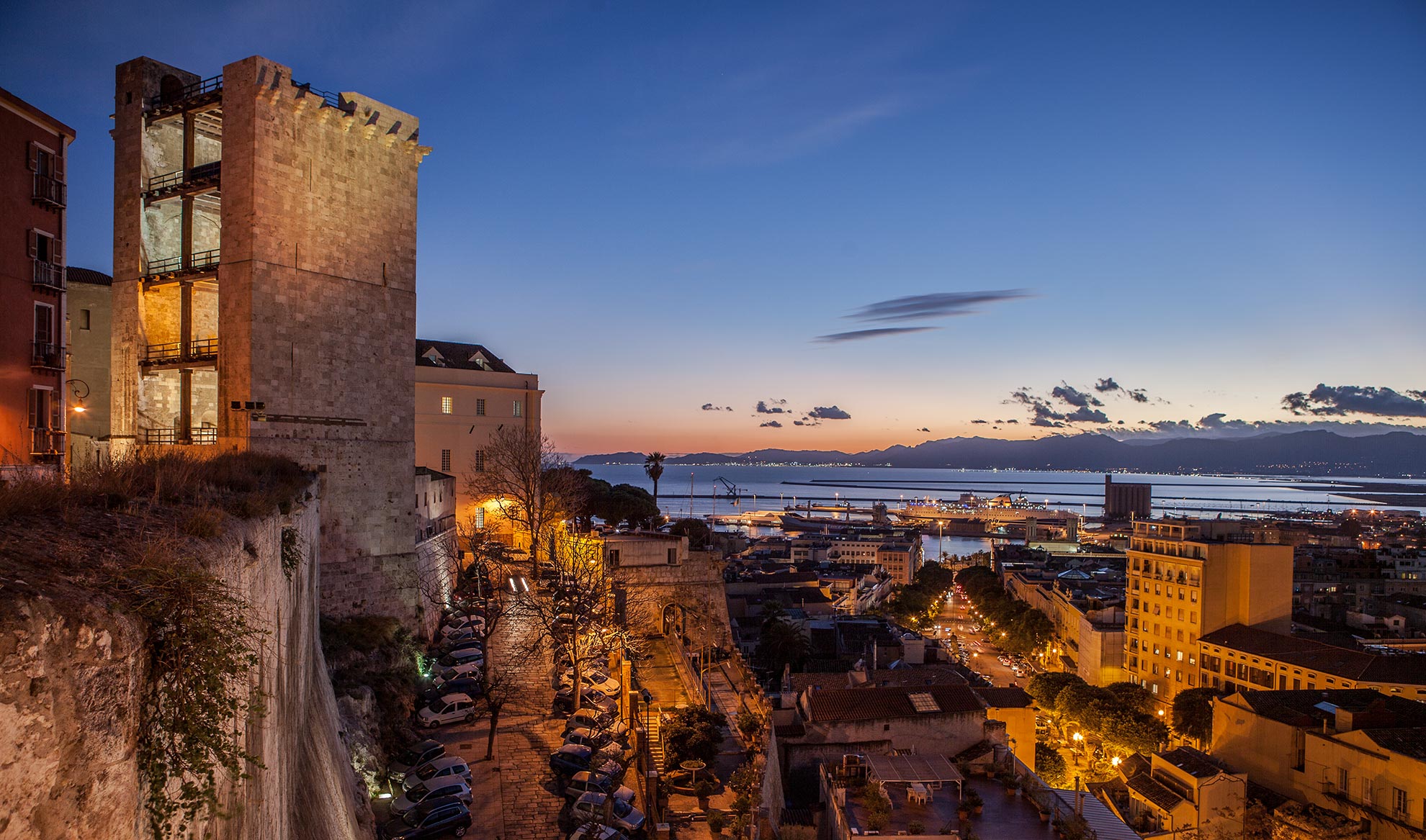
The Tedeschina Tower is located on the western side of the Castello district.
Built in the early 14th century, it was named after a group of German mercenaries that lived in the ancient stronghold of Castel di Castro.
Restored in 1376 after the siege of Marianus IV of Arborea, during the sixteenth century it was incorporated by Rocco Cappellino in the Concezione bastion. During these works, the tower, which originally was between 10 and 12 meters high, was lowered.
The bricks testify to the restoration works that took place over the centuries.
Torre Tedeschina
Via Fiume
Your review will be visible after approval by the editors
To post a review you must be an authenticated user.
Log in with Social Login
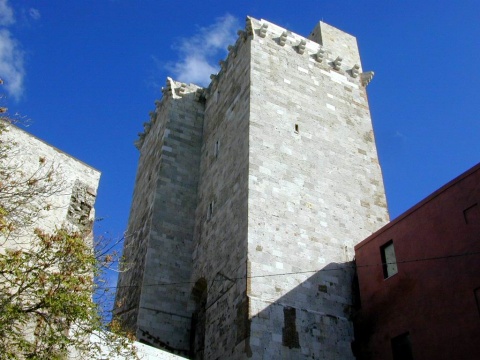
The Spanish Tower, also known as Torre di Mezza Spiaggia (Tower of half-beach), is located along the beach of Poetto, not far from the structure of the former Marine Hospital, in the Municipality of Cagliari.
Its construction dates back to the 16th century, when the Spaniards decided to fortify the entire coast of Sardinia to protect themselves from raids from the sea.
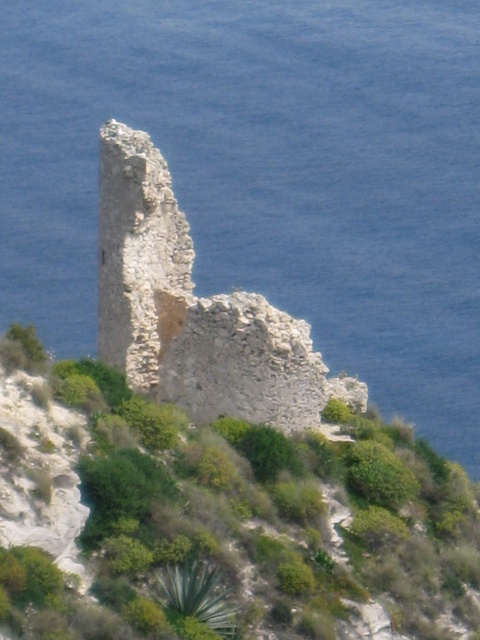
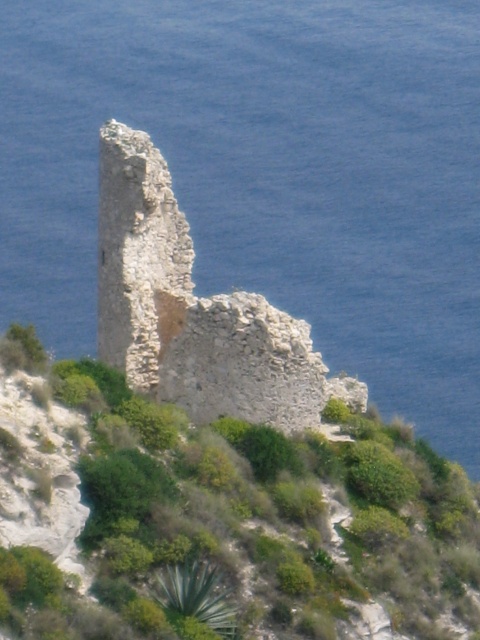
The other Towers are: the Poetto’s tower and the Saint Elia’s tower, on the Devil's Saddle, then westwards; while looking east we find the Tower of Carcangiolas (now reduced to ruin), and the Tower of Foxi, the Tower of Cala Regina and the Tower of Su Fenugu in the locality of Torre delle Stelle.
In the Spanish era, almost all of these towers, with clear skies, were easily visible from each other, making communication between them easy and timely in the event of attacks by raiders.
The structure of the Torre di Mezza Spiaggia is in limestone, truncated-conical in shape, with a height of about eight meters and a small terrace which was accessed from the inside.
Torre Spagnola o di Mezza Spiaggia
Spiaggia del Poetto - pressi vecchio Ospedale Marino
Your review will be visible after approval by the editors
To post a review you must be an authenticated user.
Log in with Social Login
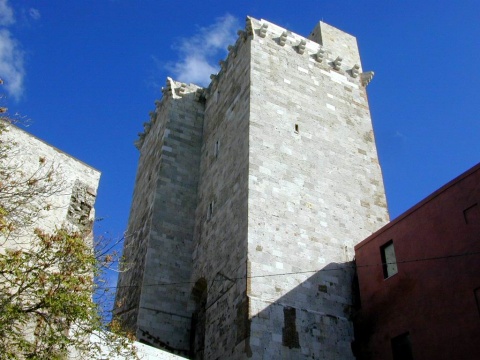
The Tower Franca (or Tower Passarina), with its twin Tedeschina, closed the north front of Castello. Today it is visible, only partially, in Arsenale Square, on the right side of the Palace of the Seziate, and in Buoncammino Avenue, on the left, turning from Porta Cristina.
Built in the sixteenth century, it was used as a tower of ammunition but, in 1575, due to the modified defensive needs, it was lowered and absorbed, together with the Tedeschina, in the Bastion of the Conception; a curtain joined it to the Gate of the Capuchins (near the current Cristina’s Gate), giving rise to what would later become Arsenale Square.
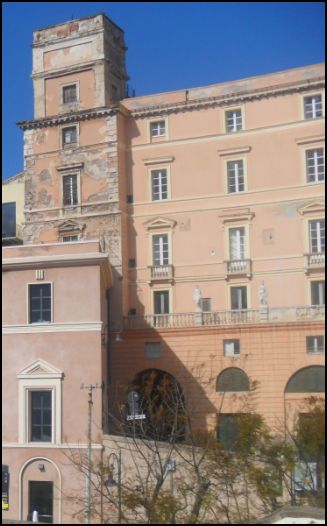
Towards the end of the seventeenth century, the Palace of the Seziate was built in the space until then occupied by the curtain wall and, in 1839-40, the Palace, shortly before raised above one floor, ended up incorporating the tower, then renamed Torrione delle Seziate.
In the 1980s it was also the subject of the restoration that affected Arsenale Square, following which you can now access the interior of the Seziate curtain to admire the intact wall face of the tower.
The upper part of the tower now houses some offices of the BAPSAE Superintendency of the Provinces of Cagliari and Oristano.
Torre Franca
Viale Buoncammino
Your review will be visible after approval by the editors
To post a review you must be an authenticated user.
Log in with Social Login
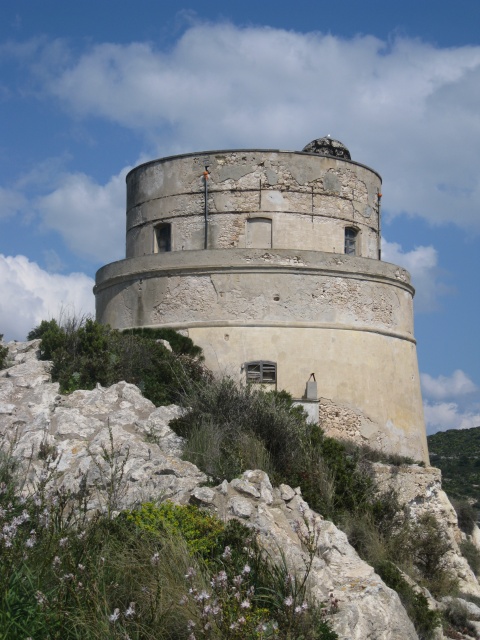
Remaining part of a 14th century defensive structure, later partially incorporated into St. Lucy's church (15th century).
Torre di Santa Lucia
Via Martini
Your review will be visible after approval by the editors
To post a review you must be an authenticated user.
Log in with Social Login
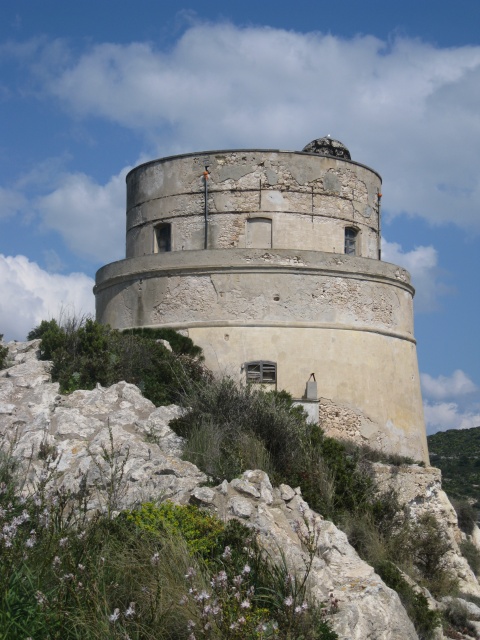
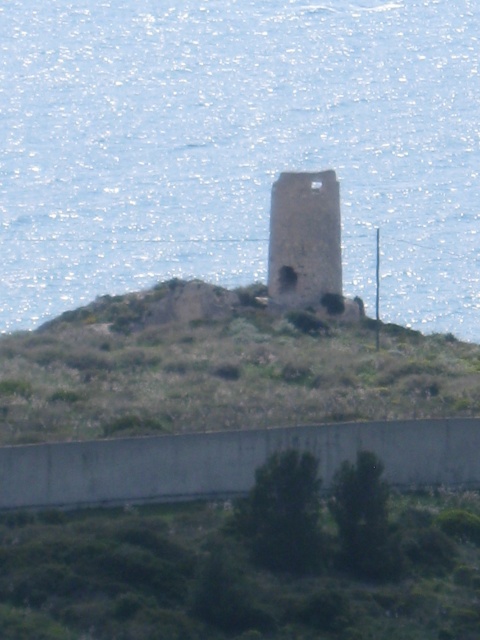
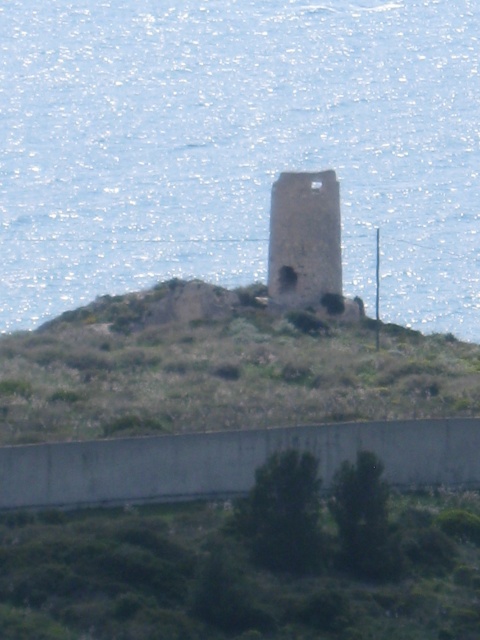
The Tower of Saint Elia, also called the Lantern’s Tower, was built in 1282 by the Pisans on commission of Bondo Camulitano and Colo Frapano, castellans of the Castrum of Cagliari in that time.
It is located on the top of the Saint Elia’s promontory, near the church erected in honour of Elia, and made it possible to control all the sea space in front of it, ensuring visual connection with the other towers built along the coast of the gulf.
Manned by two guardians (later called "torrieri" during the subsequent Royal Administration of the Towers) it served as a lighthouse and guard tower.
A seventeenth-century manuscript describes the need for the timely identification and reporting of the Genoese canal which, at that time, frequently crossed those waters threateningly. It seems that the subject of the inspections of the time was, among other things, the quantity of wood collected and stored near the tower.
In this place, signalling fires were kept lit with which the Castrum of Cagliari - still without the Towers of the Eagle, of the Elephant and of the Lion - had to be alerted to the presence of the enemy ship. In addition to the defensive military function, the tower was designed to signal the right route to the boats to follow to reach the port. It was decommissioned in the late 18th century after the French landing attempt (1793/94).
Currently the tower is in a very bad state of conservation.
Torre di Sant'Elia o Lanterna
Sella del Diavolo
Your review will be visible after approval by the editors
To post a review you must be an authenticated user.
Log in with Social Login
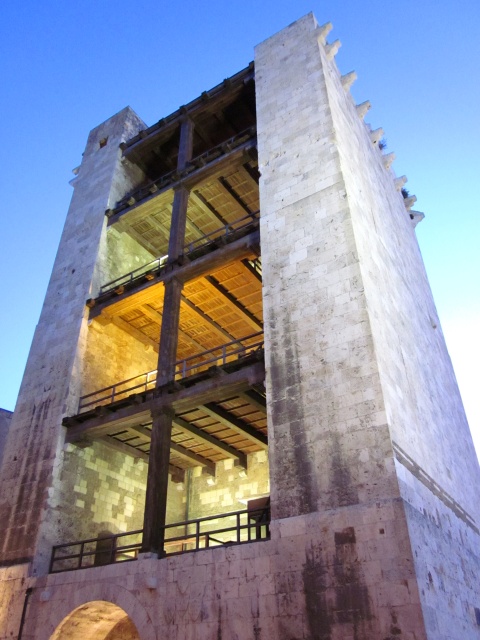
At the beginning of the fourteenth century, Pisa, in response to the threatening Aragon rise in the Mediterranean Sea, erected impressive towers in order to reinforce its stronghold in the south of Sardinia. Designed by the Sardinian architect Giovanni Capula, the Elephant Tower and the St. Pancras Tower were praised for their uniqueness, and, in 1535, Charles V, the powerful sovereign of the Holy Roman Empire, included them among the best military works of the entire Europe.
Finished in 1305, with its walls of thick limestone blocks, its narrow loopholes and its heavy gates, the St. Pancras Tower protected the northern side of Castello; placed a hundred metres above the sea level, built on four levels with a total height of more than thirty-six metres, it was also a perfect lookout station against attacks from both the sea and the hinterland.
In the sixteenth century the tower was used as a prison, where convicts lived in inhumane conditions.
The St.Pancras Tower is one of the most recognisable figures in Cagliari's landscape.
Torre di San Pancrazio
Piazza Indipendenza
Your review will be visible after approval by the editors
To post a review you must be an authenticated user.
Log in with Social Login
Situated in the locality of Calamosca, in Cagliari, it was a sighting and light defence tower, senzilla, consisting of two overlapping volumes, one with a truncated cone and one with a cylinder. It communicated with almost all the towers of the Gulf of Cagliari, except those of the Poetto, Mezza Spiaggia, Carcangiolas and Foxi.
The masonry, made of calcareous material, has a base thickness of about 3.6 m. The cylindrical part, the result of subsequent restorations, is made of brick and stone and occupies the place of the original parade ground. The entrance, located about 5 m high and oriented towards the north-west, is now walled up; the tower is accessed by a new opening created at the level of the land. From the main room, with a domed vault, you reach the upper floor, also covered by a dome, through a staircase carved into the wall thickness.
Built in 1638, it is called the Tower (or Station) of the Signals because of an ingenious signalling device that allowed it to communicate with the Castle of Cagliari. The upper cylinder did not appear in the tower design, which seems to date back to a subsequent intervention in the mid-nineteenth century, in which a further expansion of the entire complex was carried out. This operation, in addition to changing the volumes, also made important changes to the internal distribution: on the first floor, in fact, four loopholes were made and habitable rooms were created.
Having become a barracks, the tower has always remained in use and is overall in excellent condition, except for a slight deterioration of the surfaces.
Torre di Calamosca o dei Segnali
Capo Sant'Elia - pressi Faro S. Elia
Your review will be visible after approval by the editors
To post a review you must be an authenticated user.
Log in with Social Login